
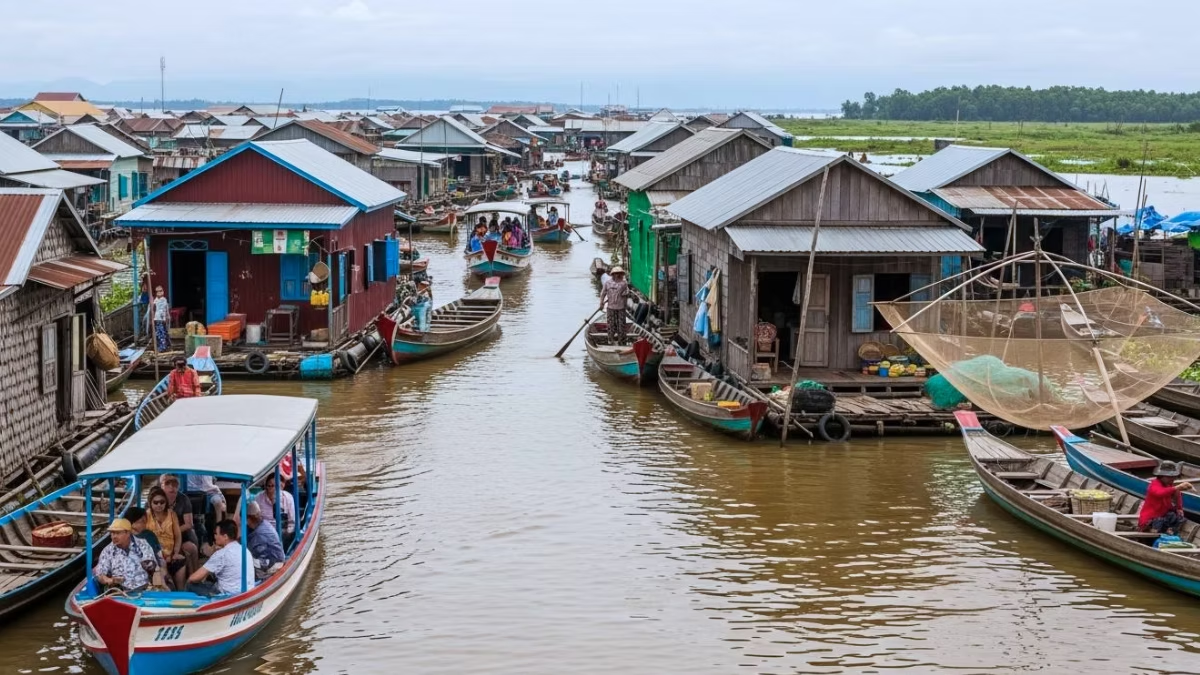
Tonle Sap Floating Village Tour from Siem Reap — What to Expect

The Tonle Sap Floating Village Tour is a half-day or full-day boat excursion from Siem Reap to Tonle Sap Lake — Southeast Asia’s largest freshwater lake — and one of its floating or stilted fishing villages. The lake is approximately 15 km south of Siem Reap city centre and can be reached in 25–30 minutes by road. Tours typically include a boat ride on the lake, a visit to one or more floating communities, and a sunset view over the water. It is the most popular add-on to an Angkor Wat visit in Siem Reap and requires no Angkor Pass.
Tonle Sap Lake is not an optional extra to an Angkor Wat visit — it is part of the same ecosystem. The Angkor Empire built its civilization on the productivity of the Tonle Sap: the lake’s annual flood cycle, which pushes it from 2,500 km² in the dry season to over 16,000 km² in the wet season, deposited nutrient-rich sediment that made the surrounding plains among the most fertile in Asia. The fish amok you eat in Siem Reap restaurants is made with Tonle Sap fish. The sandstone of Angkor Wat was quarried at Phnom Kulen and floated down canals connected to the Tonle Sap. The lake is woven into everything about Angkor.
What the Tour Covers
A standard Tonle Sap floating village tour departs from the Chong Kneas or Kompong Khleang dock south of Siem Reap, boards a boat for a 30–60 minute ride on the lake, visits one or more floating communities (where houses, schools, churches, and shops float on pontoons), and returns to shore. Sunset tours conclude with the boat stopping on the open lake for views of the sun setting over the water — one of the flattest and most expansive sunsets available anywhere in Cambodia.
What you typically see on the tour:
- The journey from the main dock through water channels and reed beds to the open lake
- One or more floating villages — communities of several hundred to several thousand people who live permanently on the water, with floating schools, floating churches, and floating markets
- Crocodile farms (some villages operate these — visible from the boat)
- Bird habitats and water bird colonies, particularly in the flooded forest areas at the lake’s edge
- The open lake itself — up to 16,000 km² in the wet season, creating a genuine inland sea experience
Best Time to Visit the Tonle Sap
Wet season (August–October): The lake is at maximum size. The stilted villages at Kompong Phluk are surrounded by flooded forest, creating the most dramatic and photogenic conditions. The boat rides through the flooded forest are only possible during this period.
Shoulder season (November–December): The lake is still large but beginning to recede. Good conditions for all village types. The surrounding rice paddies are freshly harvested.
Dry season (January–May): The lake is at its smallest. At Chong Kneas, the water is shallow enough that boats can run aground; at some floating villages, houses are towed to follow the receding waterline. The flooded forest at Kompong Phluk is no longer flooded. Less photogenic but still accessible.
Sunset timing: Tonle Sap sunset tours are most beautiful when the lake is large (wet season and early dry season). The flatness of the open water and the enormous sky create sunset silhouette compositions unlike anything available in Cambodia.
Combining the Tonle Sap with the Angkor Temples
The Tonle Sap is naturally combined with an Angkor temple visit as the afternoon or evening component of a long day:
- Morning temples (5:00–12:00 PM): Angkor Wat, Bayon, Ta Prohm
- Afternoon rest (12:00–3:00 PM): Lunch and rest at your hotel
- Tonle Sap sunset tour (3:00–6:30 PM): Drive to the lake, boat tour, sunset on the water, return to Siem Reap for dinner
This combination fits naturally into a single long day with a 3-day Angkor Pass — using day one for temples in the morning and the lake in the afternoon.
Alternatively: The Tonle Sap can be the main activity on a day between temple days — particularly useful for visitors who are experiencing temple fatigue after two intense temple days and want something tonally different before returning for a final day at the outlying temples.
Practical Notes
The Tonle Sap Lake entry fee: A $1–5 environmental fee is often charged at some docks — confirm with your tour operator whether this is included.
What the floating villages are: These are not tourist constructs. They are permanent communities of thousands of people — primarily ethnic Vietnamese and Cambodian fisherfolk — who live on the lake year-round. Some have done so for generations. Approach the visit with the same respect you would bring to any inhabited community.
Photography: Personal photography throughout the tour is generally welcomed and expected. Exercise the same discretion you would visiting any inhabited community — photograph people with their awareness and apparent consent, particularly children.
The crocodile farms: Some floating village tours pass crocodile farms where hundreds of crocodiles are raised for their skins and meat. These are legitimate businesses in Cambodia’s rural economy. Whether to stop varies by tour and visitor preference.
No Angkor Pass required: The Tonle Sap tour is entirely separate from the Angkor Archaeological Park. No Angkor Pass is needed or used.
Frequently Asked Questions
What is Tonle Sap Lake?
Tonle Sap is the largest freshwater lake in Southeast Asia. Its size varies dramatically between dry and wet seasons — from approximately 2,500 km² in the dry season to over 16,000 km² at peak wet season flood. The lake and its annual flood cycle were the ecological foundation of the Khmer Empire and remain a crucial resource for Cambodian fishing and agriculture.
How far is Tonle Sap Lake from Siem Reap?
The main Chong Kneas dock is approximately 15 km south of Siem Reap, reached in 25–30 minutes by tuk-tuk or car. More authentic villages like Kompong Khleang and Kompong Phluk are 35–40 km from the city, reached in 45–60 minutes.
Do I need an Angkor Pass for the Tonle Sap tour?
No. The Tonle Sap tour operates entirely outside the Angkor Archaeological Park. No Angkor Pass is required.
What is the best floating village to visit near Siem Reap?
Experienced travellers consistently recommend Kompong Khleang or Kompong Phluk over Chong Kneas. Chong Kneas is more convenient but highly commercialised. Kompong Khleang offers a more authentic community experience; Kompong Phluk offers the flooded forest experience during the wet season.
Is the Tonle Sap tour suitable for children?
Yes. Boat rides and floating communities are naturally engaging for children. The experience is mild and family-friendly. Confirm with your operator that life jackets are provided on the boat for children.
