
Neak Pean Temple — The Island Sanctuary Guide

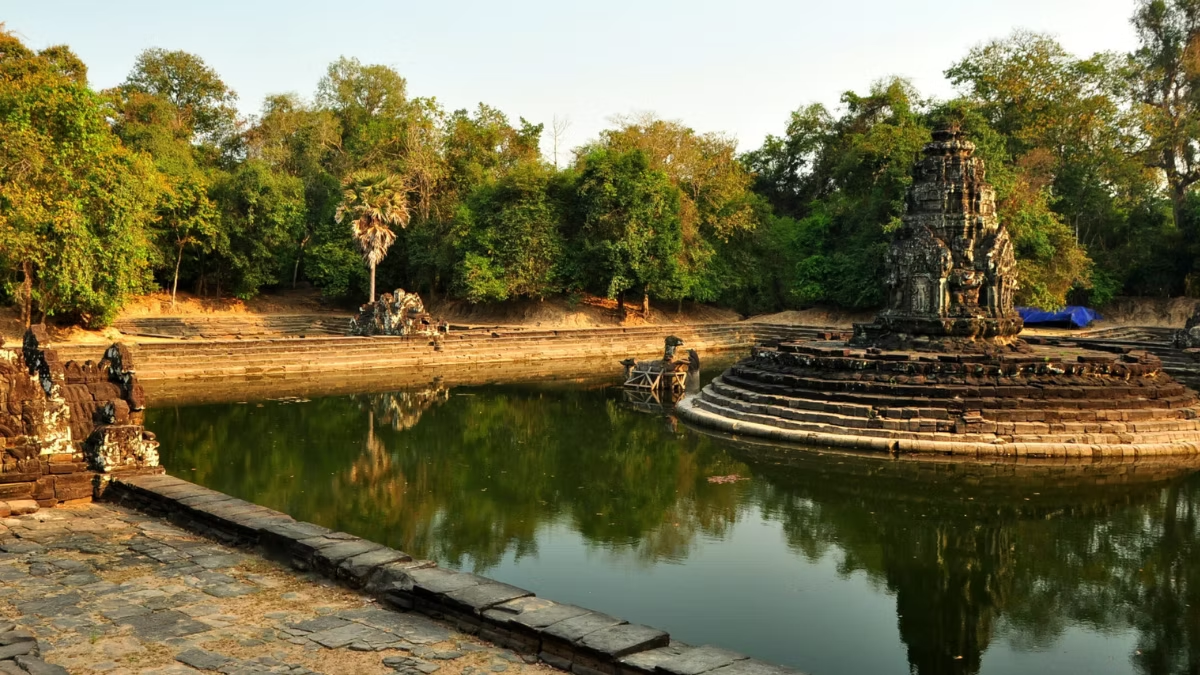
Neak Pean (“Intertwined Serpents”) is a small but remarkable 12th-century Buddhist temple complex built on an artificial island at the centre of the Preah Khan Baray — a large reservoir on the Grand Circuit. The central structure is a circular island platform surrounded by four smaller pools, each accessible through a stone spout in the form of a different animal head. It was conceived as a representation of the mythological Himalayan lake Anavatapta — a place of healing where the sick came to be cured. It opens at 7:30 AM, closes at 5:30 PM, and is included in the Angkor Pass.
Neak Pean is the temple that most surprises visitors who have spent the morning at Angkor Wat and Bayon. It is small — the central island is approximately 14 metres in diameter — and structurally simple compared to the architectural complexity of the main circuit temples. But it is unique: a circular stone island in the middle of water, connected to its surrounding pools by stone spouts and animal-head fountains, occupying an architectural typology that exists nowhere else in the Khmer world.
Top Tickets
Essential Facts
| Feature | Detail |
|---|---|
| Location | Grand Circuit, within the Preah Khan Baray |
| Built | Late 12th century, under Jayavarman VII |
| Religion | Mahayana Buddhist |
| Size | Central island c.14m diameter; surrounding reservoir large |
| Opens | 7:30 AM |
| Closes | 5:30 PM |
| Entry | Included in Angkor Pass |
| Best time | Early morning or late afternoon (less glare on water) |
The Design — What You’re Looking At
Neak Pean consists of a central circular island platform (the main shrine), surrounded by a square arrangement of four pools — north, south, east, and west — each connected to the central island by a stone spout in the form of an animal head: elephant (north), lion (south), horse (east), and human (west). The name “Neak Pean” refers to two intertwined serpents at the base of the central island — their tails coil to form the island’s base, and their bodies rise on either side. The surrounding baray (reservoir) is large enough that the central island appears surrounded by a significant body of water.
The central island: The main shrine consists of a tower on a circular base, flanked by Buddha images and a large sculpture of the divine horse Balaha — the Bodhisattva Avalokiteshvara transformed into a horse to rescue shipwrecked sailors. The tower itself is a relatively simple lotus-bud form.
The nāgas: Two nāga (serpent deity) figures form the base of the central island, their bodies rising to flank the shrine. The name “Neak Pean” refers to these intertwined serpents. Their tails extend into the water below.
The four pools: Four square pools (chapels) are arranged at the cardinal points around the central island, each accessible by a stone gateway. The pools are connected to the central island by stone spouts carved as animal heads:
- Elephant (north): Water from the central pool flows through the elephant spout into the north pool
- Lion (south): The lion spout feeds the south pool
- Horse (east): The horse spout feeds the east pool
- Human (west): A human-headed spout feeds the west pool
The symbolism: Each animal represents one of the four components of Khmer healing ritual. Pilgrims would bathe in the pool corresponding to their illness — the animal head associated with each pool was believed to direct the healing properties of the water. The central pool represented the mythological lake Anavatapta; its water, flowing through the animal spouts, was transformed into healing water specific to each condition.
The Baray (Reservoir)
The Preah Khan Baray that surrounds Neak Pean is one of the largest Angkorian reservoirs — approximately 3.5 km × 0.9 km. Neak Pean sits at its centre, visible from the raised causeway that crosses the baray from the south.
Seasonal variation: In the wet season (August–October), the baray is full or nearly full of water, and Neak Pean truly appears as an island in a lake. In the dry season, water levels drop significantly — sometimes to the point where the island is accessible on foot across exposed baray floor rather than across water. The wet-season experience is dramatically more evocative.
The causeway approach: A raised stone causeway connects the southern bank to the central island area. The view from the causeway — looking north across the water to the island shrine — is the primary photographic composition at Neak Pean.
Visiting Neak Pean
Access: A 400-metre wooden boardwalk extends from the road (Grand Circuit) across the baray to the temple. In the dry season, the baray floor is exposed and the boardwalk raised above it; in the wet season, the boardwalk extends over actual water.
Time required: 30–45 minutes is sufficient for Neak Pean. It is small, and the primary experience is the visual impression rather than extended architectural exploration. Most visitors spend 20 minutes at the temple and then return along the boardwalk.
Photography: The best compositions are from the southern end of the boardwalk, looking north along the boardwalk toward the island shrine. Morning light (when the sun is behind you and illuminating the shrine) is the optimal direction. The reflection of the shrine in the surrounding water (wet season) is excellent.
What you cannot do: The central island itself is not accessible — you view it from the surrounding area. Access is restricted to protect the fragile island structures.
When to Visit
Wet season (August–October): The best time for the full island experience — water surrounds the shrine on all sides, the nāgas’ tails disappear into actual water, and the reflection compositions work beautifully.
Dry season (November–May): The baray is partially or largely dry. The boardwalk still leads to the shrine, but the atmosphere of an island is much reduced.
Time of day: Early morning (7:30–9:00 AM) is best — the light is warm, the baray surface is still, and almost no other visitors are present. Neak Pean is consistently one of the least crowded Grand Circuit temples.
Neak Pean in the Grand Circuit Context
Neak Pean is most naturally visited as part of a Grand Circuit day that includes Preah Khan (immediately to the west), Ta Som (immediately to the east), and Pre Rup. The driving sequence Preah Khan → Neak Pean → Ta Som → Pre Rup covers the northern half of the Grand Circuit in a half-day.
See our Small Circuit vs Grand Circuit guide for the full route planning picture.
Frequently Asked Questions
What is Neak Pean?
A 12th-century Buddhist temple complex built on a circular island at the centre of a large reservoir (baray) on the Grand Circuit. It was conceived as a representation of the mythological Himalayan healing lake Anavatapta, and pilgrims came to bathe in its pools for healing.
Is Neak Pean worth visiting?
Yes — it is unique in the Angkor complex and takes only 30–45 minutes to visit. Its design typology exists nowhere else in the Khmer world, and the island experience (especially in the wet season) is genuinely distinctive.
When is the best time to visit Neak Pean?
The wet season (August–October), when the baray is full and the shrine is a genuine island. Early morning is the best time of day for light and lack of crowds.
Can you walk on the central island of Neak Pean?
No — the central island is restricted. You view the shrine from the surrounding area and the boardwalk approach.
