
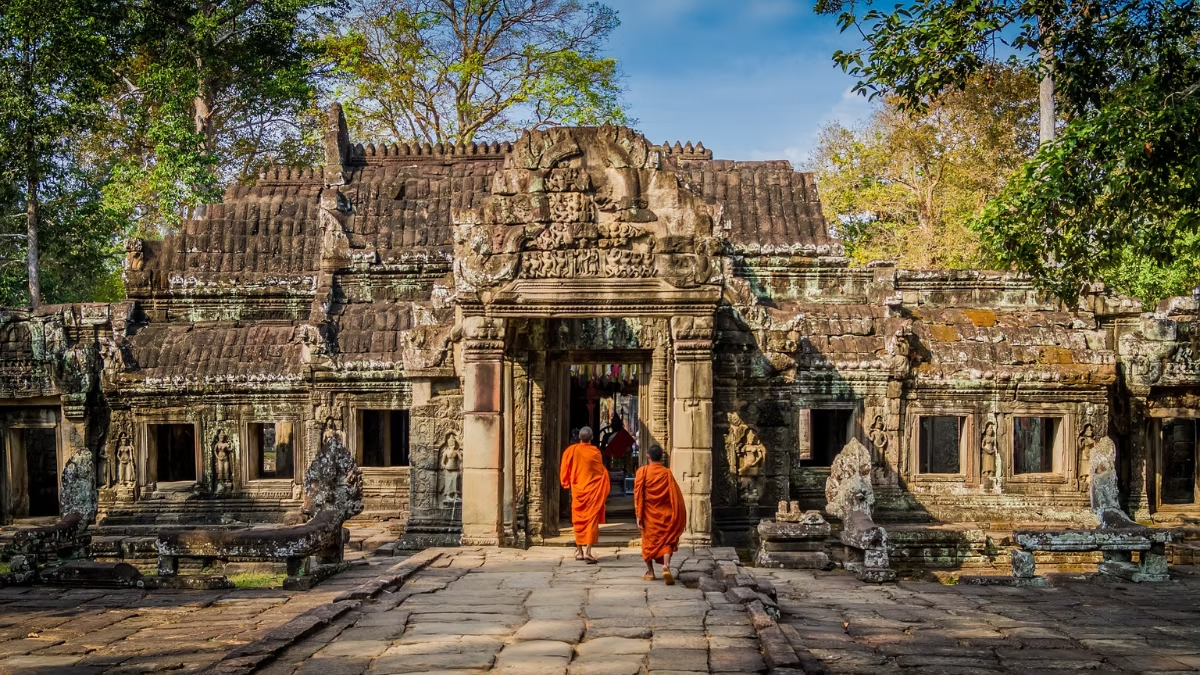
Best Time to Visit Angkor Wat — Season, Month & Time of Day

The best time to visit Angkor Wat is from November to February, during Cambodia’s dry season, when temperatures are cooler (20–28°C), skies are clear, and the light for photography is exceptional. For the fewest crowds within that window, aim for November or early February — December and January see peak visitor numbers. For the absolute quietest experience at any time of year, arrive at Angkor Wat before 6:00 AM for sunrise, or visit in the late afternoon from 3:30 PM onwards.
Timing your visit to Angkor Wat is one of the most important decisions you will make when planning your trip to Cambodia. The difference between arriving at the right moment and the wrong one is the difference between standing in solitary wonder before a 900-year-old temple at golden hour and fighting for elbow room among hundreds of tour buses at midday.
This guide breaks down the best time to visit by season, by month, and by time of day — covering weather, crowd levels, photography conditions, and cost considerations — so you can choose the window that suits you best.
Top Tickets
Best Time to Visit Angkor Wat by Season
Dry Season — November to April (Recommended)
The dry season (November to April) is the best overall time to visit Angkor Wat. Rainfall is minimal, paths are navigable, and the skies cooperate for photography. The trade-off is that this period — particularly December and January — brings the heaviest tourist traffic. Temperatures range from a comfortable 20–28°C in November to February, rising to 30–38°C by March and April.
Cambodia has two distinct seasons: a dry season (roughly November to April) and a wet season (roughly May to October). For the majority of visitors, the dry season offers the most practical and enjoyable conditions.
November to February (Cool Dry Season) is widely considered the sweet spot. Temperatures hover between 20°C and 28°C, humidity is manageable, skies are reliably blue, and the temple stones glow gold in morning and afternoon light. This is peak tourist season, however — particularly the weeks surrounding Christmas, New Year, and Chinese New Year (which falls in late January or early February depending on the year). Expect significantly larger crowds at the most popular temples during these periods.
March and April (Hot Dry Season) bring rising heat — temperatures regularly exceed 33°C by midday and can reach 38°C in April. Humidity remains lower than in the wet season, but the midday heat is genuinely punishing. The upside is that crowds thin noticeably from February onwards, and by March and April you will share the temples with far fewer visitors than in peak months.
Wet Season — May to October (For Budget Travellers and Crowd-Avoiders)
The wet season (May to October) offers dramatically lower crowds, lush green jungle scenery around the temples, and significantly cheaper accommodation in Siem Reap. The downside is daily afternoon rainstorms — typically lasting 1–3 hours — and higher humidity. Most temples remain fully accessible, and the rain rarely prevents a full day of temple exploration if you plan around the afternoon showers.
The wet season is dramatically underrated by most travel guides. Yes, it rains — but “wet season” in Cambodia does not mean constant rain. Mornings are typically clear and beautiful, and rainfall usually arrives in the afternoon. If you start early (as you should at Angkor Wat regardless of season), you will often complete your temple visits before the rain begins.
The benefits are significant. Accommodation prices in Siem Reap can drop by 30–50% from peak levels. The Angkor Archaeological Park is far less crowded — visitor numbers in the low season run at roughly 15–20% of peak season figures. The surrounding rice paddies and jungle are vividly green, and the moat and reflecting pools around Angkor Wat are filled to capacity, creating exceptional reflection photography conditions.
May and June are the transition months — rain begins but crowds have not yet dropped dramatically. July, August, and September are the wettest months but also the quietest. October is a particularly attractive shoulder month: the rains are tapering off, the landscape is still lush, crowds remain low, and prices are beginning to recover.
Best Month to Visit Angkor Wat
| Month | Temp Range | Rainfall | Crowd Level | Best For |
|---|---|---|---|---|
| January | 20–30°C | Very Low | Very High | Best weather, accept the crowds |
| February | 20–32°C | Very Low | High | Good balance late in month |
| March | 24–34°C | Low | Moderate | Growing heat, thinning crowds |
| April | 26–38°C | Low | Low–Moderate | Hot but quiet |
| May | 27–35°C | Moderate | Low | Green season begins |
| June | 27–34°C | High | Low | Lush and quiet |
| July | 26–33°C | High | Very Low | Quietest month |
| August | 26–33°C | High | Very Low | Very quiet, good value |
| September | 26–33°C | High | Low | Rains tapering |
| October | 26–33°C | Moderate | Low | Best shoulder month |
| November | 22–30°C | Low | Moderate | Excellent — ideal balance |
| December | 20–28°C | Very Low | Very High | Peak season |
Best overall month: November — the rains have ended, temperatures have dropped to comfortable levels, and the crowds have not yet reached the December peak. The landscape retains some of the greenness of the wet season, and the lower water table has begun to settle, leaving the moat beautifully reflective.
Best Time of Day to Visit Angkor Wat
Sunrise: 5:00 AM to 7:00 AM
Sunrise at Angkor Wat is one of the most celebrated experiences in Southeast Asian travel. The main temple faces west, which means the rising sun illuminates the towers from behind as they reflect in the north and south reflecting pools — a composition that has become one of the most reproduced images in travel photography. To secure a good position at the reflecting pools, arrive by 5:00–5:15 AM. The temple itself opens at 5:00 AM.
Sunrise is magical — and popular. The reflecting pool positions fill quickly, particularly from October to March. Arriving by 5:15 AM is sufficient in the low season; during peak months (December and January), aim for 4:45 AM if you want an unobstructed view. A guided sunrise tour handles the logistics and positioning for you.
After sunrise, most tour groups move on to other temples in the Angkor complex. The window from 7:00 to 9:00 AM — after sunrise but before the midday rush — is one of the best times to explore Angkor Wat’s interior in relative peace.
Early Morning: 7:00 AM to 10:00 AM
This is the second-best window of the day. Light is excellent for photography, temperatures are cool, and the post-sunrise crowd has thinned. If you are not attending sunrise, arriving at 7:00–7:30 AM and heading directly into the inner galleries gives you roughly 2–3 hours of comfortable exploration before the midday tour buses arrive.
Midday: 11:00 AM to 2:00 PM
Avoid this window if you can. This is when tour group traffic peaks, temperatures are at their highest, and the overhead light creates harsh shadows that make photography difficult. If you do find yourself at Angkor Wat at midday, use the time to explore the shaded inner galleries and bas-relief corridors — where the light is indirect and temperatures are cooler.
Late Afternoon: 3:30 PM to 5:30 PM
An underused gem. Most tour groups have left by mid-afternoon, and the light from 4:00 PM onwards turns the sandstone a warm amber-gold. Angkor Wat faces west, meaning the afternoon light illuminates the main façade directly — making this the best time of day for photographs of the western entrance and causeway. The temple closes at 6:00 PM.
Sunset
Note that Angkor Wat is not the ideal sunset spot — because it faces west, you end up looking into the setting sun. The best Angkor sunset viewpoint is Phnom Bakheng, a hilltop temple that offers a panoramic view over the jungle with Angkor Wat visible in the distance. Phnom Bakheng has a strict capacity limit of 300 visitors at sunset — arrive by 4:00 PM to be sure of a place.
Best Time to Visit Angkor Wat for Photography
The golden hours at Angkor Wat are exceptional. Morning golden hour (5:30–7:30 AM) provides soft, warm light ideal for the iconic reflecting pool shot and temple tower compositions. Evening golden hour (4:30–6:00 PM) illuminates the western façade in rich amber tones.
The wet season (June to September) offers an additional photography advantage: dramatic skies, storm clouds, and lush green vegetation create more dynamic and unusual compositions than the flat blue skies of high season. Our dedicated Angkor Wat photography guide covers the best positions, lenses, and timing in detail.
Best Time to Avoid the Crowds
The quietest times to visit Angkor Wat are July and August (wet season), weekday mornings in the low-to-shoulder season, and the 3:30–5:30 PM window on any day of the year. The busiest days are weekends during December and January, and any national holiday period including Chinese New Year, Khmer New Year (April), and international school holidays. Midday (11:00 AM–2:00 PM) brings peak tour bus traffic regardless of season.
For a more detailed breakdown of crowd patterns at Angkor Wat and other temples in the park, see our Angkor Wat crowds guide.
Frequently Asked Questions
What is the best month to visit Angkor Wat?
November is widely considered the best single month to visit Angkor Wat. The wet season has ended, temperatures have dropped to 22–30°C, skies are clear, and visitor numbers have not yet reached the December–January peak. The landscape retains some greenness from the wet season, and the moat and reflecting pools are well-filled for photography.
Is the rainy season a bad time to visit Angkor Wat?
Not necessarily. The wet season (May to October) offers fewer crowds, lower prices, and lush green jungle scenery. Rainfall is typically concentrated in afternoon showers, leaving mornings clear for temple exploration. The main practical concern is that some dirt paths between outlying temples can become muddy and difficult to navigate. The main temples, including Angkor Wat itself, remain accessible year-round.
What time does Angkor Wat open?
Angkor Wat opens at 5:00 AM every day of the year, specifically to allow visitors to experience sunrise. Most other temples in the Angkor Archaeological Park open at 6:00 AM or 7:30 AM. The ticket office opens at 4:30 AM.
How early should I arrive for Angkor Wat sunrise?
Arrive at the north or south reflecting pool by 5:00–5:15 AM for a good position during most of the year. During peak months (December and January), arrive by 4:45 AM to secure a front-row position at the reflecting pools. A guided sunrise tour from Siem Reap will handle transport and positioning.
Is Angkor Wat hot?
Yes, Cambodia is a tropical country and Angkor Wat can be extremely hot, particularly from March to May when midday temperatures can exceed 38°C. Even in the coolest months (December to February), temperatures reach 28–30°C by midday. Wear light, breathable clothing that also covers shoulders and knees (required for temple entry), carry water, apply sunscreen, and plan to rest during the hottest midday hours.
When is Angkor Wat least crowded?
The least crowded times are July and August (wet season), followed by May, June, September, and October. Within any given day, the quietest windows are before 8:00 AM and after 3:30 PM. The busiest periods are December, January, and Chinese New Year. Weekends are consistently busier than weekdays throughout the year.
Is it worth visiting Angkor Wat in the wet season?
Yes, for the right type of traveller. If you prioritise space and tranquillity over guaranteed sunshine, the wet season (particularly October and November on the shoulder) is excellent. Prices are lower, crowds are a fraction of peak levels, and the surrounding landscape is strikingly beautiful. The rain is manageable with early starts and afternoon shelter in Siem Reap.
What is the best time of day for the Angkor Wat reflecting pool photo?
The classic reflecting pool photograph is best captured at sunrise, between 5:30 and 6:30 AM, when the towers are silhouetted against the brightening eastern sky and their reflection appears in the north reflecting pool. Cloud cover can enhance or ruin this shot — a partly cloudy morning often produces the most dramatic results. The south reflecting pool is less crowded than the north.
