
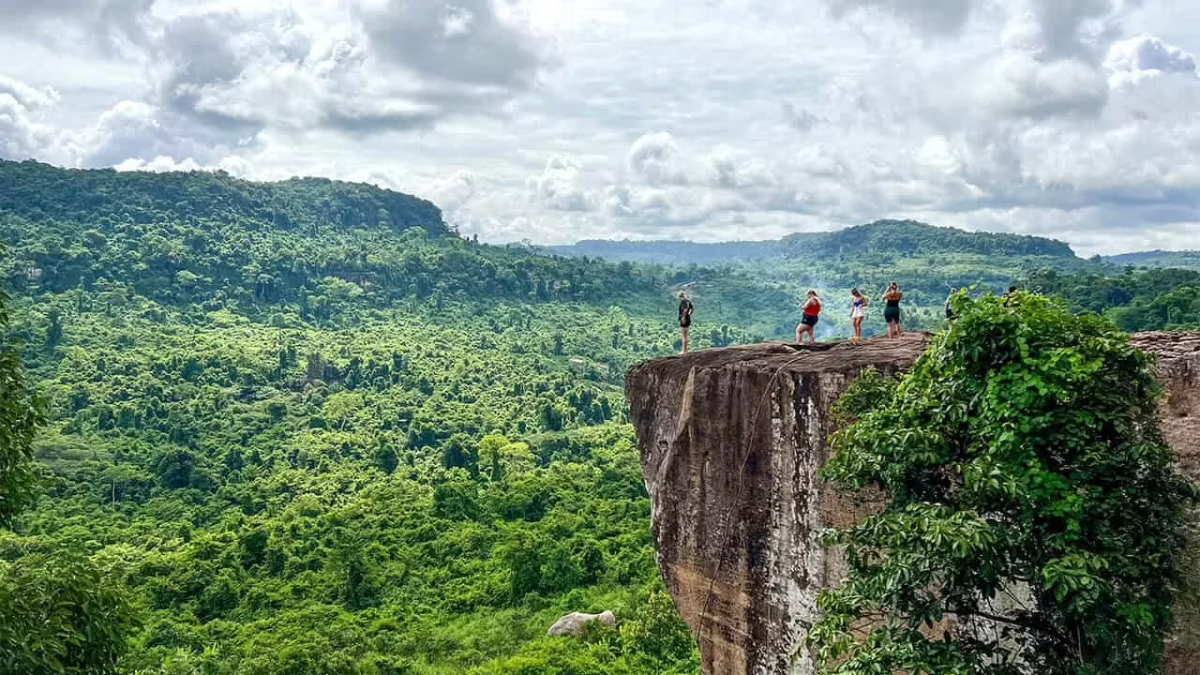
Phnom Kulen National Park Tour — Waterfalls, Sacred Mountain & River Lingas

Phnom Kulen National Park, 48 km north of Siem Reap, is Cambodia’s most sacred mountain — the site where Jayavarman II declared the independence of the Khmer Empire in 802 CE. Key attractions include a large reclining Buddha carved from a single rock, the River of a Thousand Lingas (ancient Sanskrit symbols carved into the riverbed over which the water flows), a spectacular double-tiered waterfall, and early Khmer temples. A separate $20 ticket is required — it is not included in the Angkor Pass. Phnom Kulen is best visited with a guide and is an ideal third-day addition to a two-day Angkor temple itinerary.
Phnom Kulen is the place where Angkor began. When Jayavarman II climbed this mountain in 802 CE and declared himself a god-king, he initiated the Khmer Empire that would go on to build Angkor Wat, Bayon, and every other temple you visit in Siem Reap. The mountain is therefore not merely a natural attraction adjacent to the temples — it is the origin point of the entire civilisation you have come to Cambodia to understand.
Key Attractions at Phnom Kulen
The Reclining Buddha
The most visited site on Phnom Kulen is a large reclining Buddha carved from a single natural rock outcrop near the summit. The Buddha is approximately 8 metres long and is housed inside a temple — Preah Ang Thom — that Cambodians consider among the most sacred sites in the country. Pilgrims climb the mountain specifically to worship here, and the site has a charged spiritual atmosphere distinct from the archaeological sites of the Angkor plain below.
The River of a Thousand Lingas (Kbal Spean)
Kbal Spean is a riverbed approximately 30 minutes’ walk from the nearest road access point on Phnom Kulen, carved with thousands of lingas (Hindu phallic symbols representing Shiva) and relief sculptures of deities and mythological scenes. The carvings were cut directly into the sandstone riverbed at the source of the Siem Reap River — the same water that flows down to Angkor Wat — making this literally the sacred source of the water that sustained the Khmer capital. The best season to visit is the wet season (June–October) when the water level is high enough to flow beautifully over the submerged carvings.
The walk to Kbal Spean through the jungle is itself part of the experience — a shaded, 30–45 minute trail with occasional views over the plain below. The carved riverbed, when you reach it, is extraordinary — hundreds of figures emerging from the rock through clear water. A guide who knows the iconography (the linga forms, the Vishnu scenes, the river deity carvings) transforms this from a curiosity into a comprehensible sacred landscape.
Best season for Kbal Spean: June–October, when water levels are higher and the carvings are more dramatically presented. In the dry season (February–April), water levels can be low enough to expose the carvings dry — less photogenic but still accessible.
The Phnom Kulen Waterfall
Phnom Kulen’s main waterfall is a double-tiered cascade approximately 15 metres high, with a swimming area at the base that Cambodian families use on weekends and holidays. The falls are most spectacular during and after the wet season (July–October), when the volume of water is at its peak. During the dry season (February–May), the flow reduces significantly.
Swimming: The pool at the base of the lower falls is popular for swimming during weekends. On weekdays, the site is significantly quieter.
The Early Khmer Temples
Several early pre-Angkorian and early Angkorian temples are scattered across Phnom Kulen — small, largely unrestored, and rarely visited by casual tourists. A guide familiar with the mountain can visit one or two of these as part of an extended Phnom Kulen day.
Book Phnom Kulen Guided TourGetting to Phnom Kulen
Distance and drive time: Approximately 48 km north of Siem Reap, reached in 1–1.5 hours by car. The road rises steeply in the final section as it ascends the mountain — a private car or minibus is strongly recommended. Tuk-tuks should not attempt the mountain approach road.
Road condition: The main road to Phnom Kulen is sealed but the ascent is steep and winding. A private car with an experienced driver is the safest and most comfortable option.
Admission: A separate $20 ticket is required at the mountain entrance. This is not included in the Angkor Pass. Buy at the gate on arrival — tickets cannot currently be purchased online.
Opening hours: Phnom Kulen National Park opens at approximately 8:00 AM and closes at 3:00 PM (the mountain road closes to ensure all visitors descend before dark). This closure time is strict — plan your visit accordingly and do not arrive at the mountain entrance after 1:00 PM if you want adequate time at the summit.
Full-Day Itinerary for Phnom Kulen
A comfortable Phnom Kulen day from Siem Reap:
- 7:00 AM: Depart Siem Reap by private car
- 8:30 AM: Arrive at Phnom Kulen entrance — pay $20 ticket
- 9:00 AM: Reclining Buddha at Preah Ang Thom temple
- 10:00 AM: Drive or walk to the Kbal Spean trailhead
- 10:30 AM–12:00 PM: Walk to and explore Kbal Spean (River of a Thousand Lingas)
- 12:30 PM: Lunch at one of the restaurants near the waterfall area
- 1:00–2:30 PM: Phnom Kulen waterfall (swimming optional)
- 2:30 PM: Begin descent — the road closes at 3:00 PM for upward traffic
- 4:00–5:00 PM: Return to Siem Reap
Note: The Kbal Spean walk (30–45 minutes each way through jungle) is moderately strenuous. Wear comfortable shoes with good grip, carry water, and allow more time during the wet season when the path can be slippery.
Combining Phnom Kulen with the Angkor Temples
Phnom Kulen is most logically combined with a 2–3 day Angkor itinerary:
- Day 1 and 2: Main circuit temples (Angkor Wat, Bayon, Ta Prohm, Grand Circuit)
- Day 3: Phnom Kulen — a natural and spiritual contrast to two days of archaeology
The $20 Phnom Kulen ticket is in addition to your Angkor Pass. If you have a 3-day Angkor Pass, you can use two of your days at the main temples and reserve the third for Phnom Kulen — though the Phnom Kulen entry requires its own separate ticket regardless.
Frequently Asked Questions
Is Phnom Kulen included in the Angkor Pass?
No. Phnom Kulen National Park requires a separate $20 ticket, payable at the mountain entrance gate. It is not included in any Angkor Pass tier.
What is the best time of year to visit Phnom Kulen?
The wet season (June–October) is the best time for the waterfall (at peak flow) and for Kbal Spean (the river carvings are beautifully presented under flowing water). The dry season is feasible but the waterfall and river levels drop significantly.
Can I swim at Phnom Kulen?
Yes — the pool at the base of the waterfall is popular for swimming. It is particularly busy on weekends when Cambodian families visit. Weekdays are much quieter.
How long does a visit to Phnom Kulen take?
Allow a full day (7–8 hours from Siem Reap). The drive, temple visit, Kbal Spean walk, lunch, and waterfall together fill a comfortable day without rushing.
Can I visit Phnom Kulen independently without a guide?
Yes — but a guide adds significant value, particularly at Kbal Spean (where the iconography of the carvings is not self-evident) and at the early temples (which are difficult to find without local knowledge). Many operators offer Phnom Kulen day trips with a guide included.
