
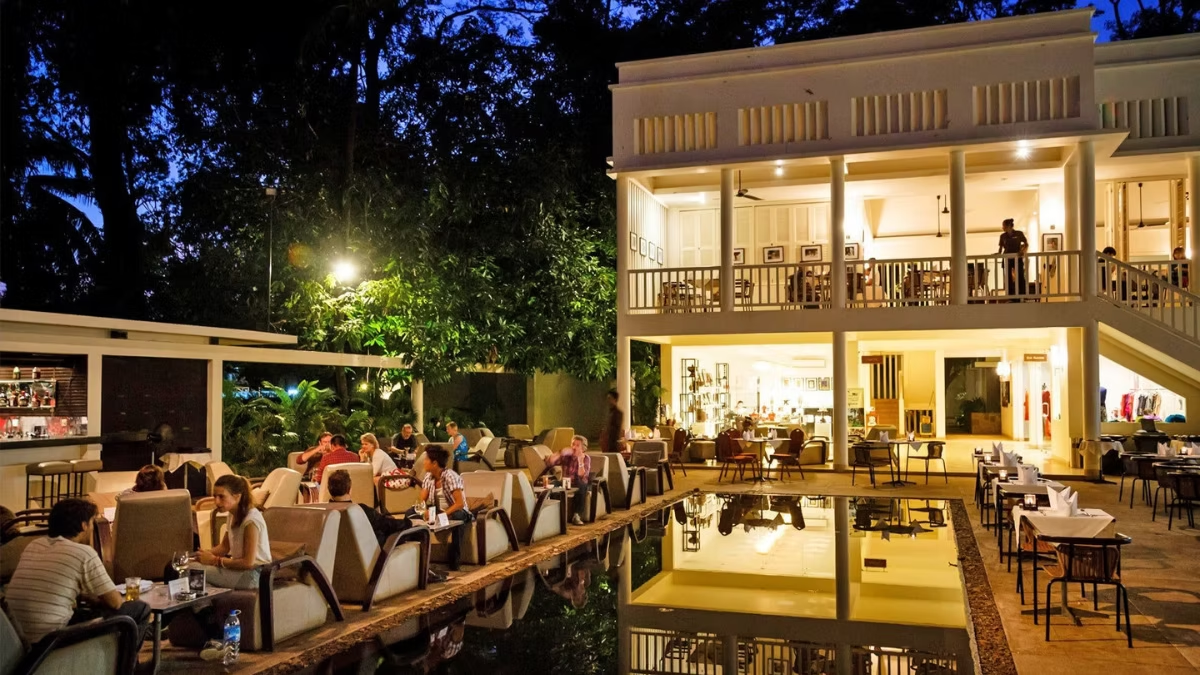
Food & Restaurants Near Angkor Wat — Where to Eat (2026)

There are no restaurants inside the Angkor Wat temple itself. Food stalls and restaurants are located just outside the main western entrance and along the main road between Angkor Wat and Angkor Thom. The most practical strategy for most visitors is: eat breakfast and dinner in Siem Reap city (far better food, lower prices), and use the temple-area restaurants for a quick, functional midday break between temple visits. The park-area restaurants are convenient but charge a significant premium over Siem Reap prices.
Eating well while visiting Angkor Wat requires a small amount of strategy — food inside and near the Angkor Archaeological Park is significantly more expensive than equivalent meals in Siem Reap, and quality varies. This guide tells you exactly where to eat at different points in your day, what Khmer dishes to try, and how to manage food logistics on a budget.
Top Tickets
Eating Near the Temples: What to Expect
Restaurants Along the Main Park Road
The road between Angkor Wat and Angkor Thom (and continuing through the park) has a cluster of restaurants serving Cambodian, Asian, and Western food. These are convenient for a midday break — you can be back inside a temple within 10–15 minutes of finishing your meal.
Price range: Expect to pay $5–10 for a main dish, $1.50–2 for a local beer, and $1–2 for water. This is 2–3x the equivalent price in Siem Reap city.
Quality: Functional rather than exceptional. The food is adequate and the air conditioning (at the larger restaurant complexes) is genuinely welcome in the midday heat. Do not come here for a great meal — come here for a functional recovery stop.
Near Angkor Wat Western Entrance
Immediately outside the main causeway on the western side, several stalls and small eateries sell coconut water, fresh fruit, snacks, and simple hot food. These are inexpensive ($1–3) and convenient for a quick energy top-up between temples. They are also the best place to buy cold bottled water ($0.50–1) near the temple.
Near Ta Prohm and Banteay Kdei
A small cluster of food stalls operates near the Ta Prohm and Banteay Kdei entrance areas. Similar prices and quality to the main park road options.
Banteay Srei Area (30 km North)
Banteay Srei is sufficiently far from the main park that the food options around it are notably different — smaller family-run Cambodian restaurants along the approach road rather than the tourist-oriented complexes near the main circuit. These tend to offer better value and more authentically Cambodian food than the main park restaurants.
Eating in Siem Reap: The Better Option
The far better eating strategy for most visitors is to time meals in Siem Reap city — where the food is significantly better, cheaper, and more varied than anything near the temples.
Old Market Area (Psah Chas)
The Old Market and its surrounding streets are the heart of Siem Reap’s food scene. Market stalls inside the Old Market sell fresh produce, local snacks, and cooked food from early morning. The streets immediately south and east of the market are lined with excellent Khmer restaurants serving local food at local prices ($2–5 for a main).
Must-try at the Old Market area:
- Lok lak (stir-fried beef with lime sauce and rice) — a Cambodian classic
- Fish amok (fish curry steamed in banana leaves) — the national dish of Cambodia
- Bai sach chrouk (barbecued pork with rice) — the standard Khmer breakfast, available from street stalls from 5:00 AM
Pub Street and Surrounding Streets
Pub Street (Street 8) has a higher density of tourist-oriented restaurants, which means higher prices but also more familiar Western options and consistently high food hygiene standards. Many excellent mid-range restaurants are clustered in the streets immediately parallel to Pub Street — Lane 1, Lane 2, and the streets running off them.
Good for: Western food cravings after days of temple visits; international cuisine (Thai, Indian, Chinese, Italian); cocktails and evening drinks.
Street Food in Siem Reap
Siem Reap’s night market and street food scene (particularly around the Old Market and the river promenade) comes alive from 5:00 PM onwards. Grilled meats, spring rolls, fresh fruit smoothies, and Khmer desserts are all available at street prices ($0.50–2).
Angkor Tour with Meals
For visitors who want to simplify logistics and not think about where to eat during a temple day, the Angkor Sunrise or Sunset Tour with Breakfast or Lunch Included handles this for you.
Book This TourKhmer Food: What to Try During Your Visit
Cambodian cuisine is distinct from Thai and Vietnamese food but shares some Southeast Asian characteristics — fragrant herbs, freshwater fish, rice as the staple, and generous use of palm sugar, galangal, lemongrass, and kaffir lime.
Essential Khmer dishes:
- Fish amok: The most celebrated Cambodian dish — fish curry (traditionally freshwater fish) cooked in a thick coconut milk sauce seasoned with kroeung (a Khmer spice paste), steamed in banana leaves. Available at most Siem Reap restaurants.
- Bai sach chrouk: Thin slices of marinated pork, grilled over charcoal and served with steamed rice, pickled vegetables, and clear chicken broth. The definitive Khmer breakfast — available from 5:00 AM from street vendors and early-opening local restaurants.
- Lok lak: Cubes of stir-fried beef (or chicken) served on lettuce with sliced tomatoes, red onion, and a dipping sauce of lime juice, salt, and pepper. Often served with a fried egg on top.
- Samlor machu: A sour soup made with tamarind, tomatoes, and pineapple, typically with freshwater fish or prawns. Warming and intensely flavoured.
- Nom banh chok: Cambodian noodle soup — thin rice noodles served cold with a green curry sauce and fresh herbs. A popular breakfast dish.
- Khmer red curry: Milder than Thai curry, made with lemongrass, galangal, and coconut milk. Often served with fish, chicken, or vegetables and rice or bread.
Note: Many of Cambodia’s best traditional dishes are made with freshwater fish from the Tonle Sap — the largest freshwater lake in Southeast Asia, which borders Siem Reap Province. Fish amok, in particular, is best when made with fresh Tonle Sap fish.
Food and Water Safety Tips
Water: Drink bottled water only. Tap water in Cambodia is not safe to drink for visitors without a strong immune system. Bottled water is available everywhere in Siem Reap and throughout the Angkor Archaeological Park.
Ice: Ice in established restaurants in Siem Reap and the park area is generally safe (made from purified water). Exercise more caution with ice at smaller street stalls.
Fruit: Fresh fruit from market stalls is safe when peeled. Pre-cut fruit (mango, papaya, etc.) sold in bags from street stalls is generally safe but consume the same day.
Heat and appetite: It is common to lose appetite in the heat of a full temple day. Prioritise hydration and eat light, easily digestible food during the day — save your appetite for a proper meal in the evening in Siem Reap.
Frequently Asked Questions
Can you eat inside Angkor Wat?
Food and drinks (other than water) are not permitted inside the main temple galleries. Restaurants and food stalls are located outside the main western entrance and along the park road between major temples.
What is the national dish of Cambodia?
Fish amok is widely considered Cambodia’s national dish — a fish curry steamed in coconut milk and banana leaves, seasoned with kroeung spice paste. Available at most restaurants in Siem Reap and is the dish most visitors try first.
Where should I eat during an Angkor Wat temple day?
The most practical strategy: eat breakfast in Siem Reap before departing for the temples (local restaurants open from 5:00 AM for bai sach chrouk, the classic Khmer breakfast). Use the park-area restaurants for a quick midday break. Return to Siem Reap for dinner where you will get better food at lower prices.
Are there vegetarian options near Angkor Wat?
Yes. Most restaurants near the temples and throughout Siem Reap offer vegetarian options — stir-fried vegetables, tofu dishes, vegetable curries, and vegetable fried rice are standard. Buddhist monks follow a vegetarian diet, which has influenced Cambodian cuisine — vegetarian food is culturally familiar and well-made at most establishments.
How much does food cost near Angkor Wat?
Restaurant meals near the temples cost $5–10 for a main dish. In Siem Reap city, local restaurants charge $2–5 for the same type of dish. Street food in Siem Reap costs $0.50–2.
