
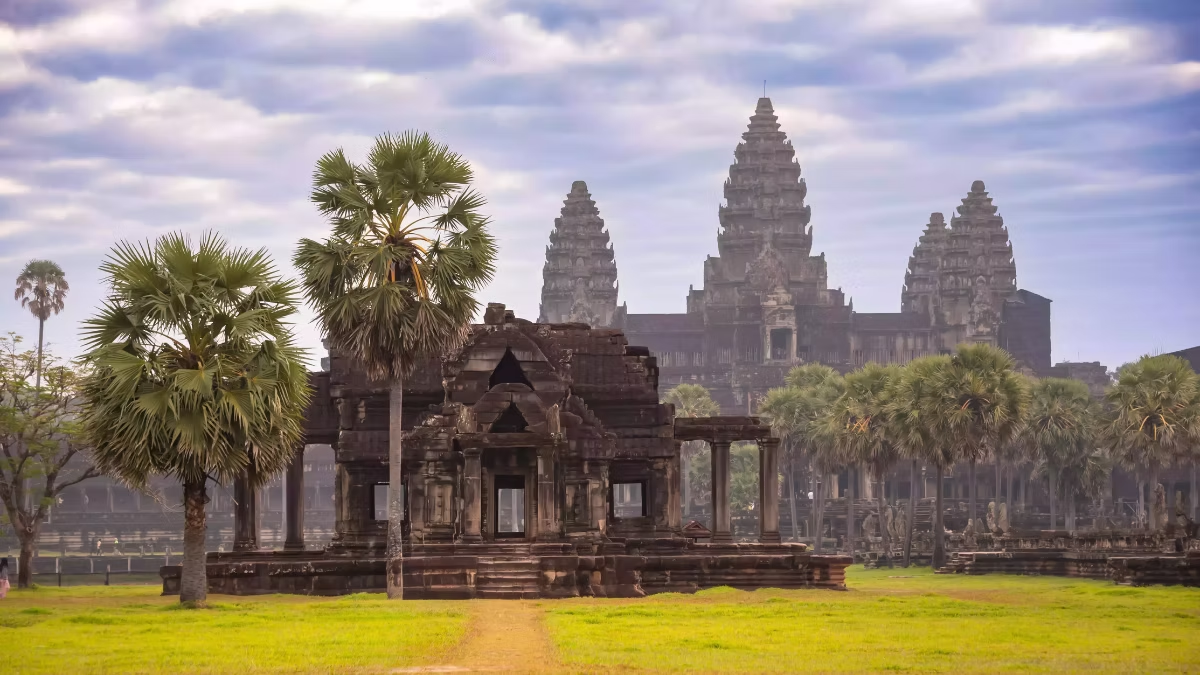
Angkor Wat on a Budget — Complete Cost Breakdown (2026)

A budget Angkor Wat visit costs approximately $60–80 per person per day (including Angkor Pass, transport, food, and basic accommodation). The unavoidable fixed cost is the Angkor Pass: $37 for one day, $62 for three days, or $72 for seven days. A tuk-tuk for the Small Circuit costs $20–25 for the whole vehicle. Budget accommodation in Siem Reap starts at $5–10 for a dorm bed and $15–25 for a private room. Food near the temples is more expensive than in Siem Reap city — plan meals strategically.
Visiting Angkor Wat is not cheap by Southeast Asian standards — the Angkor Pass is priced for international visitors, and Siem Reap’s accommodation and restaurant prices reflect its status as a major international destination. But with careful planning, a genuinely fulfilling Angkor visit is achievable on a modest budget, and the cost-per-experience ratio of a multi-day pass is exceptional.
Top Tickets
Angkor Pass Cost: The Fixed Starting Point
The Angkor Pass is the largest single expense and cannot be reduced or avoided. Prices are set by Angkor Enterprise and are the same regardless of where or how you purchase:
| Pass Type | Price | Best For |
|---|---|---|
| 1-Day Pass | $37 | Short visits; tight schedules |
| 3-Day Pass | $62 | Most first-time visitors; best value |
| 7-Day Pass | $72 | Serious explorers; excellent value |
Budget insight: Three 1-day passes would cost $111 — $49 more than the 3-day pass ($62). If you are spending 2–3 days at Angkor, the 3-day pass is the single most effective budget decision you can make. The 7-day pass at $72 is only $10 more and gives you four additional days of access.
Children under 12 enter free (passport required as proof of age). See our full Angkor Pass guide for everything that is included.
Transport Costs: Getting Around on a Budget
| Transport Option | Cost | Notes |
|---|---|---|
| Tuk-tuk (full day, Small Circuit) | $20–25 | Best value; shared over vehicle, not per person |
| Tuk-tuk (Grand Circuit) | $25–35 | — |
| Bicycle rental | $3–6/day | Cheapest option; best in cool months |
| Private car (full day) | $40–70 | Worth it for groups of 4+ |
| Motodop (solo motorbike taxi) | $8–12/day | Cheapest motorised option |
Budget tip: A tuk-tuk costs the same whether it carries one person or four. If you can split a tuk-tuk with other travellers (your guesthouse can often organise this), the per-person transport cost drops to $5–8 — comparable to a bicycle rental with far less physical effort.
Food and Drink Costs at Angkor
Food pricing follows a two-tier system at Angkor:
Inside the park and near the main temples: Restaurants along the Angkor Thom road and near Ta Prohm charge $5–10 for a main dish — significantly higher than Siem Reap city prices. These are convenient but represent a premium for location.
In Siem Reap city: Local Cambodian restaurants and markets serve meals from $2–4. The Old Market (Psah Chas) area and streets south of the Night Market have excellent Khmer food at local prices.
Budget strategy: Eat breakfast and dinner in Siem Reap. For the one midday meal you need near the temples, choose one of the Cambodian-run restaurants (rather than the more tourist-oriented ones) along the main park road. Carry snacks and 2+ litres of water from Siem Reap — water at the temples costs $0.50–1 per bottle, compared to $0.25–0.50 at Siem Reap’s convenience stores.
Water: Budget $1–2 per person per day for water at the temples. A reusable bottle filled from your hotel before departure significantly reduces this cost.
Accommodation Costs in Siem Reap
| Type | Price Range | Notes |
|---|---|---|
| Dormitory bed (hostel) | $5–10/night | Abundant near Pub Street and Old Market |
| Budget private room | $15–25/night | Guesthouses; air conditioning usually included |
| Mid-range hotel | $30–60/night | Western amenities, pool; many options |
| Luxury resort | $100–400+/night | Several world-class properties available |
Siem Reap has one of the best hostel scenes in Southeast Asia — clean, social, and competitively priced. For budget travellers, the cluster of guesthouses and hostels within walking distance of Pub Street offers excellent value, with many including free breakfast.
Book well in advance for peak season (December–February) — prices rise and good budget rooms sell out.
The Total Budget Picture
Bare-bones budget traveller (per person, per day):
- Angkor Pass (3-day, divided by 3): $21
- Shared tuk-tuk (4 people sharing): $6
- Food (local restaurants for all meals): $8–10
- Accommodation (dorm bed): $7
- Water and snacks: $2
- Total: approximately $44–46/day
Standard independent traveller (per person, per day):
- Angkor Pass (3-day, divided by 3): $21
- Solo tuk-tuk hire: $22
- Food (mix of local and tourist-area restaurants): $15–20
- Accommodation (budget private room): $20
- Incidentals (sunscreen, snacks, tips): $5
- Total: approximately $83–88/day
Note: These costs exclude international flights and visas (e-visa: $42 total).
Where Not to Overspend
Skip packaged tours for the main circuit if budget is tight. A tuk-tuk driver and a good guidebook can cover the Small Circuit temples adequately. Save the guided tour budget for Angkor Wat itself on day one — a guide for the main temple ($25–40 for a licensed guide for half a day) is money well spent for the historical context of the bas-reliefs.
Don’t buy water at the temples. Fill a large reusable bottle at your hotel before departure. The price difference is small per bottle but adds up over multiple days.
Don’t hire a guide for every temple. A guide adds enormous value at Angkor Wat, Bayon, and Banteay Srei. At Ta Prohm, Preah Khan, and the Grand Circuit temples, a basic understanding of Khmer history (from our articles or a good guidebook) is sufficient to enjoy independent exploration.
Budget-Friendly Tour Options
For travellers who want some structure without paying for a private guide, small group tours offer the best value:
- Angkor Wat Full-Day Tour with Sunrise — from approximately $25 per person in a small group
- Bike the Angkor Temples — Full-Day Tour with Lunch — cycling tour with guide and lunch included
Frequently Asked Questions
How much does it cost to visit Angkor Wat?
The minimum cost is the Angkor Pass: $37 for one day. Adding transport (tuk-tuk: $20–25), food ($8–15), and accommodation ($7–20 for a budget room or dorm), a total daily budget of $70–100 is realistic for most independent travellers. The 3-day pass ($62) reduces the per-day ticket cost to just over $20.
Is Angkor Wat free for children?
Children under 12 enter the Angkor Archaeological Park for free. A valid passport must be shown as proof of age. All other visitors pay the standard Angkor Pass rates.
What is the cheapest way to visit Angkor Wat?
Buy the 3-day pass ($62 rather than three 1-day passes at $111 total). Share a tuk-tuk with other travellers ($5–8 per person rather than $20–25 solo). Eat meals in Siem Reap rather than near the temples. Carry water from your hotel. Self-guide rather than hiring a guide for every temple.
Are there any free temples at Angkor?
No. All temples within the Angkor Archaeological Park require a valid Angkor Pass for entry. There are no free-entry temple days or discounts for partial visits. The only way to see any Angkor-area temples for free is to be a Cambodian national or a qualifying long-term resident with a Special Angkor Pass.
Should I buy my Angkor Pass in advance online?
The ticket price is the same online as at the office. Buying online (at ticket.angkorenterprise.gov.kh) is convenient and means you can skip the physical queue — particularly useful for sunrise visits. There is no discount for advance purchase.
