
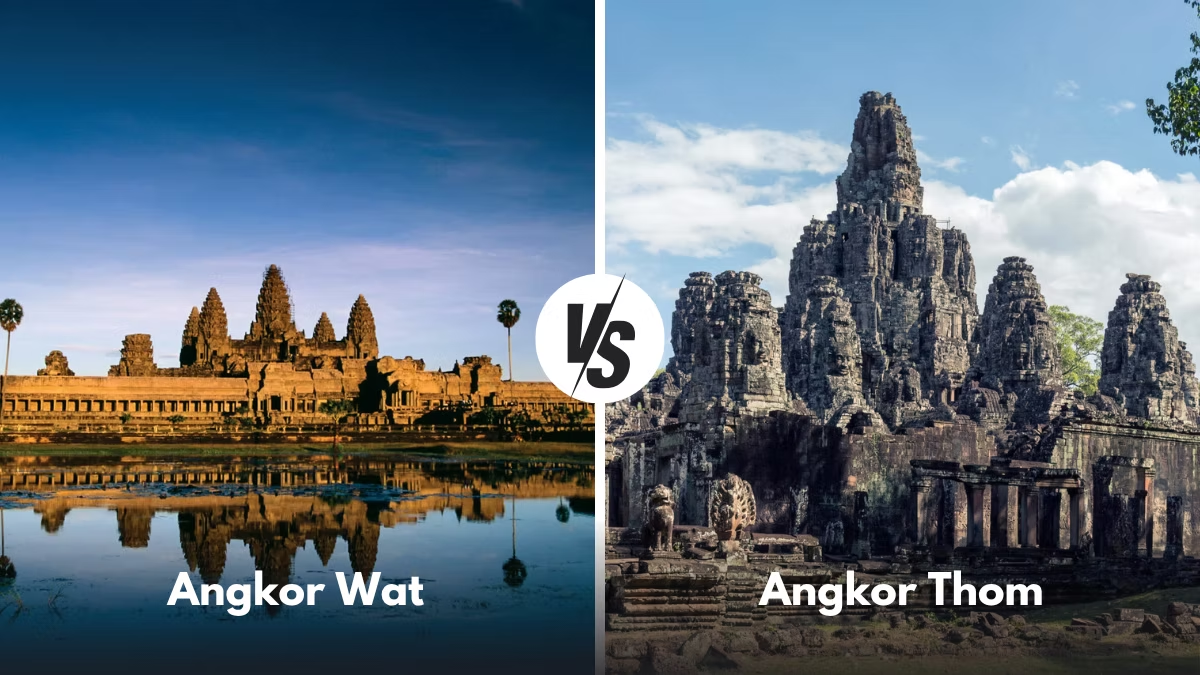
Angkor Wat vs Angkor Thom — Key Differences Explained

Angkor Wat is a single temple complex built by King Suryavarman II in the 12th century as a Hindu temple dedicated to Vishnu. Angkor Thom is an entire walled city built by King Jayavarman VII in the late 12th century as the last great Khmer capital, containing multiple temples including the famous Bayon. Angkor Wat stands outside Angkor Thom; Angkor Thom surrounds and contains Bayon. Both are included in the Angkor Pass and are typically visited in sequence — Angkor Wat first, then the temples inside Angkor Thom.
This is one of the most common points of confusion for first-time Angkor visitors. The names are similar, they are 1.7 km apart, and most guided tours cover both on the same day — so many visitors arrive not entirely sure which is which, or how they relate. This guide explains the key differences clearly.
Top Tickets
The Most Important Distinction
Angkor Wat is a temple. A single, unified architectural complex — one moat, one enclosure system, one set of galleries, five towers. It was built as the state temple and eventual mausoleum of King Suryavarman II.
Angkor Thom is a city. A walled urban complex of approximately 9 square kilometres, containing not one temple but several — including Bayon (the most famous), Baphuon, Phimeanakas, the Terrace of the Elephants, and the Terrace of the Leper King. It was built as the last great Khmer capital and functioned as a living city for centuries.
The relationship: Angkor Thom was built roughly 50 years after Angkor Wat, by a different king, in a different religious tradition. Angkor Wat (Hindu, dedicated to Vishnu) stands outside and south of the walled city of Angkor Thom (Buddhist, with Bayon at its centre).
Side-by-Side Comparison
| Feature | Angkor Wat | Angkor Thom |
|---|---|---|
| What it is | A single temple | An ancient walled city |
| Builder | Suryavarman II | Jayavarman VII |
| Built | c.1113–1150 CE | Late 12th century |
| Religion | Hindu (Vishnu) | Buddhist (Mahayana) |
| Area | 162 hectares (temple + moat) | 900 hectares (the city walls) |
| Key feature | 5 towers, 800m bas-reliefs | Bayon temple with 216 faces |
| Other contents | One unified complex | Bayon, Baphuon, Terraces, Phimeanakas |
| Entry gates | One main western gate | 5 gates (South Gate most used) |
Angkor Wat — What Makes It Unique
Angkor Wat’s defining quality is architectural coherence. The entire complex was built in a single sustained campaign under one king, following a single cosmological plan. The concentric enclosures, the axial causeway, the five towers in quincunx, and the 800-metre bas-relief gallery all work together as a unified whole. Every element of the design reinforces the central symbolic message: the king as divine intermediary between the human and the cosmic.
See the full Angkor Wat Complete Guide for the complete visitor picture.
Angkor Thom — What Makes It Unique
Angkor Thom’s defining quality is scale and complexity. It is not a single building but an entire urban environment — with royal terraces for public ceremony, administrative buildings, residences, and multiple temples, all enclosed within an 8-metre-high wall and a 100-metre-wide moat.
The Five Gates
Angkor Thom has five gates — one on each of the four cardinal sides, plus an additional “Gate of Victory” on the east side used specifically for royal processions. Each gate is a tower carved with four giant faces (echoing Bayon at the city’s centre) and approached by a 200-metre causeway flanked by 54 gods and 54 demons holding the body of a nāga serpent.
The South Gate is the most visited and most photographed — it is the gate through which most tourists enter the city from Angkor Wat. The statues on the causeway are mostly reproductions (the originals are in the Angkor National Museum and other collections), but the gate tower with its four faces is original.
Bayon Temple
The centrepiece of Angkor Thom is Bayon — the state temple with 216 giant smiling faces. Bayon sits at the exact geometric centre of the city. See the full Bayon guide for complete detail.
Baphuon Temple
Baphuon is a 11th-century temple predating Jayavarman VII that was incorporated into Angkor Thom when the city was built around it. A massive restoration project (the most complex archaeological jigsaw puzzle in the world, according to its organizers — the French dismantled the entire structure to restore it, then lost the record of how the pieces fitted together during the Cambodian civil war) was completed by EFEO in 2011. Baphuon is now one of the most fascinating temples in the park.
The Terrace of the Elephants and Terrace of the Leper King
These two elevated stone terraces running along the central square of Angkor Thom were the public ceremonial platforms of the Khmer capital — where the king appeared before his people, armies paraded, and games were held. The bas-reliefs on both terraces are extensive and in excellent condition. See our full Terrace guide.
How to Visit Both — The Sequence
Most visitors cover Angkor Wat and Angkor Thom in a single day or over two days:
1-day itinerary (highlights):
- 5:00 AM: Angkor Wat sunrise
- 7:00–10:30 AM: Angkor Wat interior (bas-reliefs, upper sanctuary)
- 11:00 AM: Drive to Angkor Thom South Gate (10 minutes)
- 11:00 AM–1:00 PM: Bayon Temple
- 1:00 PM: Lunch
- 2:00 PM: Ta Prohm (Small Circuit)
- 4:00 PM: Phnom Bakheng sunset
2-day itinerary:
- Day 1: Angkor Wat (thorough)
- Day 2: Full Angkor Thom exploration (South Gate, Bayon, Baphuon, Terraces, Phimeanakas) + Grand Circuit
See the complete Angkor Wat Itinerary guide for the full breakdown.
Frequently Asked Questions
Is Angkor Thom the same as Angkor Wat?
No. Angkor Wat is a single temple complex. Angkor Thom is an entire ancient walled city containing multiple temples, including Bayon. They are 1.7 km apart and were built by different kings in different eras.
Which is better — Angkor Wat or Angkor Thom?
Different rather than better. Angkor Wat is the most architecturally complete and historically significant single building. Angkor Thom is a city with more variety — multiple temples, royal terraces, and the extraordinary face towers of Bayon. Most visitors find both essential and recommend seeing both.
Do you need separate tickets for Angkor Wat and Angkor Thom?
No. Both are included in the standard Angkor Pass ($37/1-day, $62/3-day, $72/7-day). One pass covers the entire Angkor Archaeological Park, including all temples within Angkor Thom.
How long does it take to see Angkor Thom?
Seeing Bayon alone takes 1.5–2 hours. A thorough exploration of all Angkor Thom’s major elements — South Gate, Bayon, Baphuon, Terrace of the Elephants, Terrace of the Leper King, and Phimeanakas — takes a full half-day (4–5 hours).
