
Beng Mealea Temple — The Jungle Temple Guide (2026)

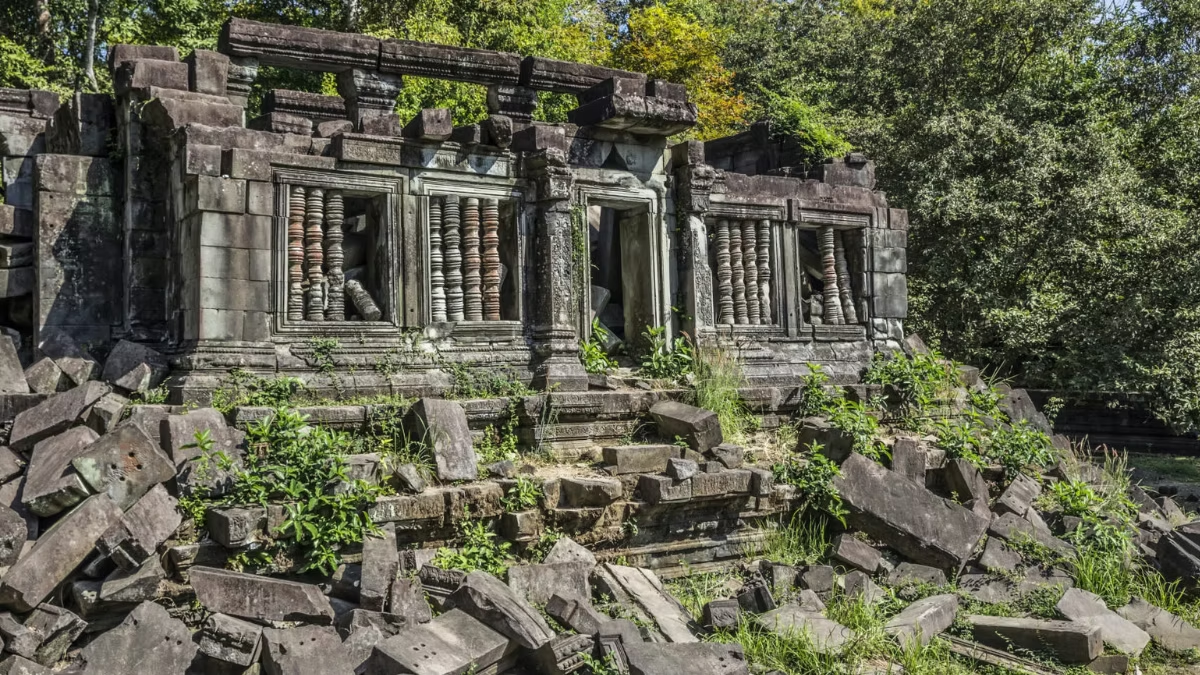
Beng Mealea (“Lotus Pond”) is a 12th-century Khmer temple approximately the same size as Angkor Wat’s inner enclosure, located 40 km east of Siem Reap. Unlike any other major Angkor temple, it has received almost no restoration — the jungle has reclaimed it almost entirely, with enormous trees splitting the galleries, stone blocks lying where they fell, and boardwalks threading through the chaos. It is included in the standard Angkor Pass and is approximately 45–60 minutes from Siem Reap by car.
Ta Prohm is famous for its trees. But Ta Prohm has been extensively managed — paths cleared, structurally dangerous trees removed, boardwalks installed, crowds managed. Beng Mealea is what Ta Prohm would look like if the restoration teams had never arrived. Trees grow through the walls from floor to ceiling. Entire gallery sections have collapsed, their stone blocks scattered across the jungle floor. The boardwalks thread through tunnels of vegetation and over piles of fallen carved stone. And almost nobody is there.
Essential Facts
| Feature | Detail |
|---|---|
| Location | 40 km east of Siem Reap |
| Built | Early 12th century (roughly contemporary with Angkor Wat) |
| Religion | Hindu (dedicated to Vishnu — same as Angkor Wat) |
| Size | Approximately 1 km × 1.2 km (outer enclosure) |
| Restoration status | Minimal — largely as found |
| Entry | Included in Angkor Pass, or $10 separate ticket |
| Travel time | 45–60 minutes by car |
| Best time to visit | 8:00–10:00 AM (before midday heat; few crowds) |
What Makes Beng Mealea Different
No restoration: Every other major Angkor temple has been consolidated, cleared, and made structurally safe to varying degrees. At Beng Mealea, the only significant human intervention is the wooden boardwalk system that channels visitors through the ruins without requiring them to scramble over fallen stone. Everything else is as it was found.
Same plan as Angkor Wat: Beng Mealea is built on the same basic plan as Angkor Wat — concentric enclosures around a central sanctuary, with galleries, libraries, and approach causeways. If you can imagine Angkor Wat without the restoration, without the cleared pathways, and with 800 years of unchecked jungle growth, you have a sense of what Beng Mealea offers.
The scale: The outer enclosure of Beng Mealea measures approximately 1 km × 1.2 km. The inner enclosure — the area most explored by visitors — is roughly the same dimensions as Angkor Wat’s inner sanctuary zone. It was a substantial temple.
Almost no crowds: Even in peak season (December–January), Beng Mealea attracts a fraction of the visitors who go to the main circuit temples. Arriving before 10:00 AM on a weekday, you may have sections of the temple entirely to yourself. This changes the quality of the experience profoundly — the sounds of the jungle, the birds, and the distant creak of the boardwalk under your feet are the primary soundtrack, rather than the murmur of hundreds of other visitors.
What to See Inside
The Main Boardwalk Circuit
The boardwalk enters from the southern gateway and winds through the central area of the inner enclosure — threading between and over collapsed stone blocks, through gallery tunnels where tree roots hang from the ceiling, and across open courtyards where stone lies scattered across the forest floor.
Key compositions on the boardwalk:
- The collapsed gallery sections where the carved wall faces are clearly visible, lying where they fell
- The large nāga balustrade fragments near the eastern causeway
- The central sanctuary area, now largely collapsed but with carved doorway elements still in place
- The northern gallery section where a large tree root system has lifted and displaced the entire stone floor
The Eastern Causeway
Approaching Beng Mealea from the east gives the most atmospheric arrival experience — a long, tree-shaded causeway leading to the eastern gopura. The causeway’s nāga balustrades are partially intact; the gopura itself is largely consumed by vegetation. The approach is not on the main tourist boardwalk and requires a short walk from the car park.
The Libraries
Two library structures (similar in form to those at Angkor Wat) stand inside the central enclosure. They are in various states of collapse — one has a large tree growing through its roof. These are the most striking single compositions for photography at Beng Mealea.
The Lintel Carvings
Despite the general condition of the temple, many of the lintel carvings above doorways remain in place and are in excellent condition — the hard sandstone has resisted deterioration well. The carvings depict scenes from the same Hindu mythology as Angkor Wat (unsurprisingly, given the temples are contemporary) — Vishnu on Garuda, the Churning of the Ocean of Milk, and mythological palace scenes.
How to Get to Beng Mealea
By private car (recommended): The most comfortable and practical option. The road is sealed for most of the journey but becomes narrower in the final section. The drive takes 45–60 minutes. Most Siem Reap tour operators and guesthouses can arrange a private car for a half-day or full-day Beng Mealea excursion.
By tuk-tuk: Possible but the 40 km each way is a long and not entirely comfortable journey in an open tuk-tuk. The road is passable. Budget 60–75 minutes each way.
On a guided day trip: Many operators offer Beng Mealea as a half-day or full-day excursion — sometimes combined with Koh Ker for a full-day outlying temple experience. See our Beng Mealea & Koh Ker Day Trip guide for details.
Admission
With an Angkor Pass: Beng Mealea is included in the standard Angkor Pass (1-day, 3-day, or 7-day). If you already have a pass, bring it — it covers entry.
Without an Angkor Pass: A separate $10 entry ticket is available at the site entrance. If Beng Mealea is your only Angkor-area temple visit, this separate ticket is more economical than a full Angkor Pass.
Best Time to Visit
Time of day: 8:00–10:00 AM is ideal — the morning light filters through the jungle canopy beautifully, the temperature is manageable, and the crowds (such as they are) have not yet arrived. Midday heat inside the jungle ruins is substantial.
Season: Beng Mealea is accessible year-round. The wet season (June–October) makes the jungle more lush and the atmosphere more dramatic, but the temple’s boardwalks can be slippery after rain — wear shoes with grip. The dry season is more comfortable for walking.
Frequently Asked Questions
Is Beng Mealea worth visiting?
Yes — particularly for visitors with 2+ days at Angkor who have already seen the main circuit temples. Beng Mealea offers an experience that no other Angkor temple can replicate: a major 12th-century temple in a state of genuine wild ruin, with almost no other visitors. It is consistently described by experienced Angkor visitors as one of their favourite sites.
Is Beng Mealea included in the Angkor Pass?
Yes. Beng Mealea is included in the standard Angkor Pass (1-day, 3-day, and 7-day). If visiting without an Angkor Pass, a $10 separate ticket is available at the site entrance.
How far is Beng Mealea from Siem Reap?
40 km east of Siem Reap, reached in approximately 45–60 minutes by car on sealed roads.
Is Beng Mealea better than Ta Prohm?
Different rather than better. Ta Prohm has been more managed and is more accessible, but Beng Mealea is wilder, larger, and has almost no crowds. For atmosphere and the sense of genuine discovery, many visitors prefer Beng Mealea. For accessibility and iconic photographic compositions, Ta Prohm is more immediately rewarding.
