
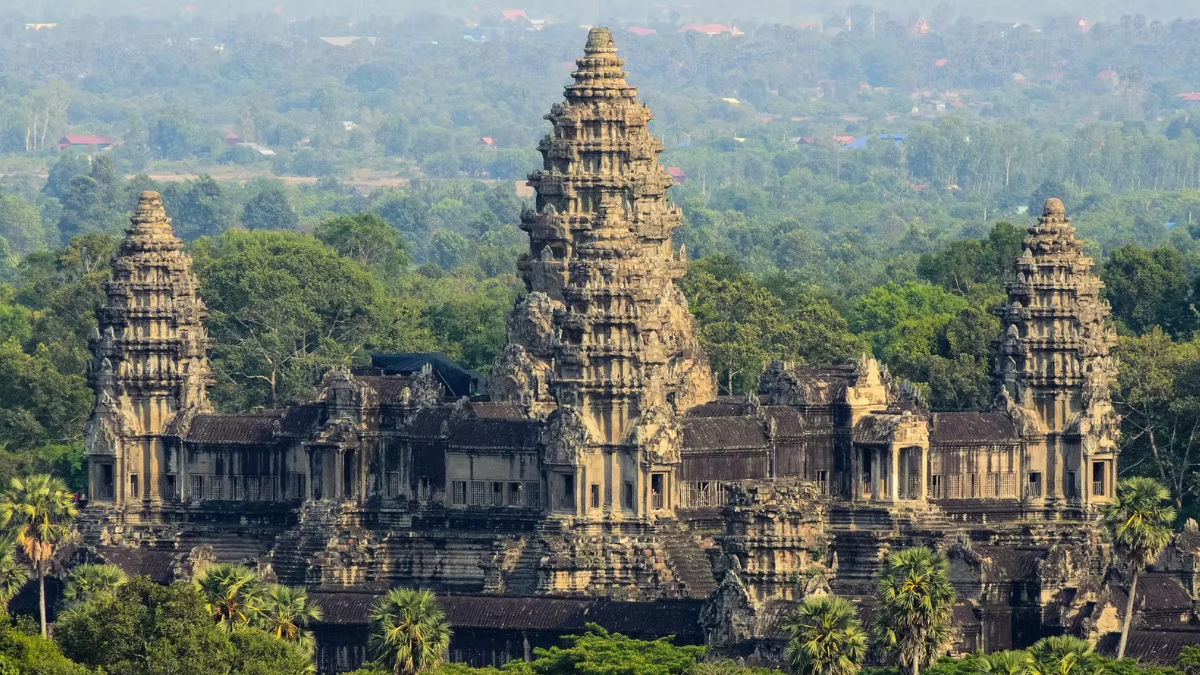
Angkor Wat Hidden Gems — Lesser-Known Spots Worth Visiting

The Angkor Archaeological Park contains dozens of temples beyond the famous trio of Angkor Wat, Bayon, and Ta Prohm. The best lesser-known experiences include Banteay Kdei (atmospheric and rarely crowded), Ta Som (the east gateway tree — better preserved than Ta Prohm’s), Pre Rup (the best non-Phnom-Bakheng sunset viewpoint), Srah Srang (the sacred lake for reflections), and the inner trench of the Terrace of the Leper King (exceptional carvings, almost nobody there). All are included in the Angkor Pass.
After two or three days at the headline temples, a pattern becomes apparent: the most photographed spots in the Angkor Archaeological Park are also the most crowded. The face towers of Bayon, the tree-root doorway at Ta Prohm, the north reflecting pool at Angkor Wat — all are extraordinary, but you experience them in the company of hundreds of other visitors on peak season days.
The Angkor Archaeological Park covers roughly 400 square kilometres. The famous sites occupy a small fraction of that. This guide covers the lesser-known spots that experienced Angkor visitors consistently rate among their favourite experiences.
Top Tickets
1. Srah Srang — The Sacred Royal Lake
Srah Srang (“Royal Bath”) is a large reservoir east of Banteay Kdei, approximately 700 metres × 350 metres, with a decorated stone landing stage on its western bank. It is one of the best sunrise reflection spots in the Angkor complex — less crowded than the Angkor Wat north reflecting pool and offering a different, broader composition. It also has an excellent elevated landing stage that gives you a panoramic view over the water.
What you see: A wide, tree-lined lake with a stone boat landing (the remains of a former wooden pavilion over the water). The eastern shore is open, giving clear morning sky reflections. Water birds — egrets, cormorants, herons — are common. In the wet season, the water surface reaches almost to the landing stage steps; in the dry season it recedes somewhat.
When to go: Sunrise and early morning are the best times — the reflection light is excellent and almost no other visitors are present. Midday visits are pleasant but less photogenic.
How to visit: Srah Srang is on the Small Circuit, immediately east of Banteay Kdei and 3 km east of Angkor Thom. Most guided tours include it as a stop between Banteay Kdei and Ta Prohm.
2. Ta Som — The Forgotten Tree Gateway
Ta Som is a small 12th-century Buddhist temple on the Grand Circuit, approximately 1 km east of Neak Pean. It is most famous for its eastern gateway, where a massive fig tree has grown over the stone gopura in a composition very similar to — and in the view of many photographers, superior to — the famous Ta Prohm “Tomb Raider” doorway. The difference is that Ta Som is rarely crowded.
Why photographers prefer it to Ta Prohm: The eastern gateway of Ta Som is smaller and more concentrated than Ta Prohm’s tree-root compositions, making the framing tighter. The tree is a different species — a Ficus benjamina — and its roots descend from directly overhead, creating an almost vertical curtain of root over the doorway. The light in the late afternoon (the east gate catches western light) is excellent.
When to go: Late afternoon (3:00–5:30 PM) for the best light on the eastern gateway. Early morning for the interior.
How to visit: On the Grand Circuit, east of Neak Pean. Typically combined with Neak Pean, Ta Som, and Pre Rup on a Grand Circuit afternoon.
3. Pre Rup — The Alternative Sunset Temple
Pre Rup is a 10th-century Hindu temple pyramid on the Grand Circuit, built by King Rajendravarman II. It is Phnom Bakheng’s less famous but often superior alternative for sunset viewing — an elevated stone pyramid that remains open until 7:00 PM and typically has a fraction of Phnom Bakheng’s crowd. The views are not panoramic (Pre Rup sits on flat ground) but the late afternoon light on the sandstone and the surrounding jungle atmosphere at dusk are genuinely excellent.
Why Pre Rup for sunset? No capacity limit. No queue. Often almost completely deserted in the late afternoon. The climb is less demanding than Phnom Bakheng. The architecture — a classic temple mountain with five towers — is beautiful in golden hour light.
When to go: Arrive by 5:00 PM for a comfortable exploration before the light goes. Pre Rup closes at 7:00 PM — the latest closing time at any Grand Circuit temple.
How to visit: On the Grand Circuit, 1.5 km south of the East Mebon. 15 minutes by tuk-tuk from Angkor Thom.
4. Banteay Kdei — The Quiet Monastery
Banteay Kdei (“Citadel of Chambers”) is a large 12th-century Buddhist monastery temple on the Small Circuit, east of Ta Prohm. It is similar in structure and atmosphere to Ta Prohm — large, partially unrestored, with tree roots growing through gallery sections — but significantly less visited. For visitors who find Ta Prohm overwhelmingly crowded, Banteay Kdei offers a similar experience in relative solitude.
What makes it different from Ta Prohm: Fewer trees (some of the significant root structures at Banteay Kdei have been removed in conservation work), more gallery sections still standing, and almost no queues. It is often visited very quickly in combination with Srah Srang — 30–45 minutes.
Best section: The “Hall of Dancing Girls” — a hall inside the second enclosure with apsara carvings in the lintels and a large amount of decorative detail. The east gateway has a decent tree-root composition.
5. The Inner Trench of the Terrace of the Leper King
Already covered in the Terrace of the Elephants guide, but worth including here as the single most overlooked feature in all of Angkor Thom. A narrow trench runs along the inner face of the Terrace of the Leper King, revealing a buried earlier terrace with carvings in exceptional condition. Almost nobody goes here. Allow 15 minutes.
6. Phimeanakas — Inside the Royal Palace
Phimeanakas (“Celestial Palace”) is a small pyramid temple inside the Royal Palace enclosure in Angkor Thom, approximately 250 metres north of Baphuon. Visitors rarely enter the Royal Palace enclosure at all — the palace buildings were made of wood and have long vanished, leaving only Phimeanakas and the surrounding enclosure walls. The temple is climbable and provides views over the surrounding jungle.
Why visit: The Royal Palace enclosure is one of the most atmospheric spaces in Angkor Thom — quiet, shaded, and almost completely empty of other visitors. The enclosure walls are covered in carvings. Phimeanakas itself is a well-preserved pyramid temple with excellent views from the summit.
7. Chau Say Tevoda — The Paired Temple
Chau Say Tevoda is a small 12th-century Hindu temple immediately south of Thommanon on the Victory Gate road through Angkor Thom. It was built by Suryavarman II (the same king who built Angkor Wat) and is architecturally similar in style to the main temple — a miniature Angkor Wat form in much smaller scale. It is rarely visited and often completely empty.
What to see: The finely carved doorway lintels and pediments in Angkor Wat’s style — a useful comparison for understanding how the Angkor Wat decorative programme relates to other Suryavarman II-era buildings.
8. The Angkor Wat South Reflecting Pool at Sunrise
Almost everyone goes to the north reflecting pool for sunrise. The south pool — 50 metres south of the main causeway — typically has one-third the crowd and a slightly different compositional angle. The difference in available positions is significant on crowded December mornings.
Frequently Asked Questions
What are the least crowded temples at Angkor?
Pre Rup, Ta Som, Banteay Kdei, Chau Say Tevoda, and Phimeanakas are consistently among the least crowded temples. Beng Mealea (40 km from Siem Reap) is the least crowded major temple in the broader Angkor region.
Which hidden gems are worth adding to a 1-day Angkor itinerary?
Srah Srang adds only 20 minutes to the standard Small Circuit and is genuinely beautiful. Pre Rup makes an excellent sunset stop instead of Phnom Bakheng for visitors who want to avoid the 300-person capacity queue.
Is Banteay Kdei worth visiting?
Yes — particularly for visitors who find Ta Prohm too crowded. Banteay Kdei offers a similar atmosphere in relative solitude, and Srah Srang immediately east is one of the best reflection spots in the park.
