
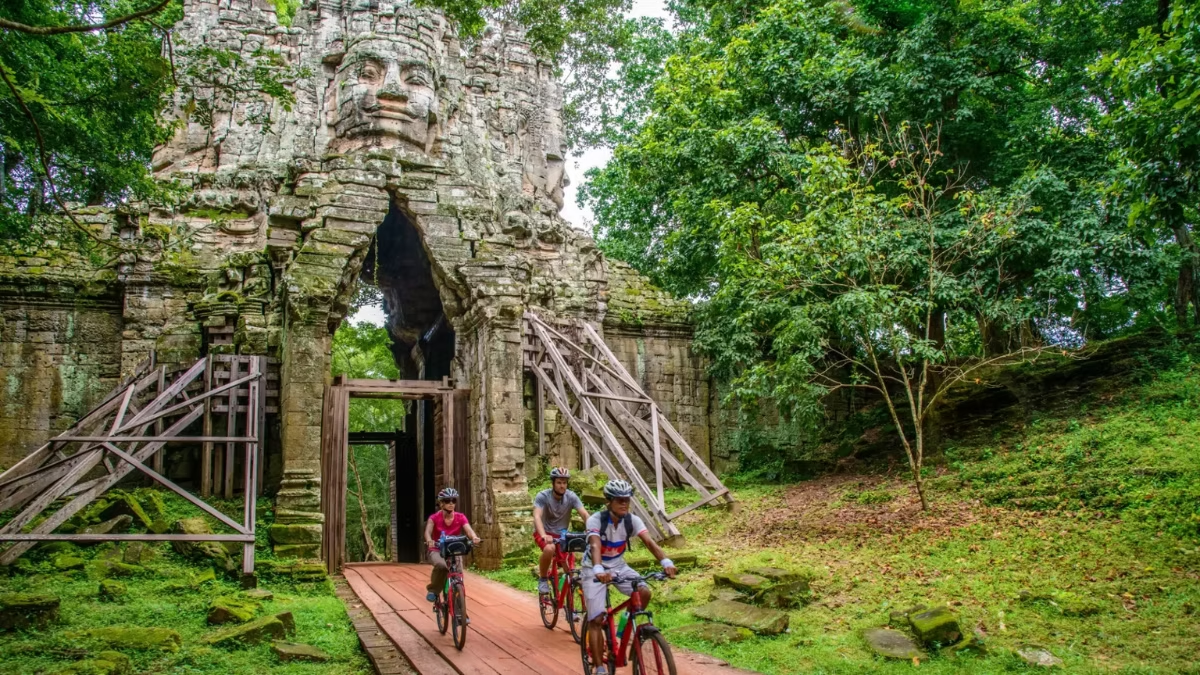
Bike the Angkor Temples — Full-Day 30km Guided Tour with Lunch

The Bike the Angkor Temples Full-Day Guided Tour is a 30km cycling day trip from Siem Reap covering the Small Circuit temples — Angkor Wat, Bayon, and Ta Prohm — with a licensed guide, a bicycle, lunch at a local restaurant, and transport from your hotel to the cycling start point. It is the best way to experience the Angkor Archaeological Park for physically active visitors who want an immersive, atmosphere-rich alternative to tuk-tuk or car transport.
The Angkor Archaeological Park’s main roads are quiet, largely flat, and shaded by trees between temples. Cycling between temples at your own pace — stopping wherever you want, experiencing the park at ground level without the barrier of glass or metal — is one of the most distinctive ways to encounter the Khmer ruins. Adding a licensed guide who explains the temples as you go elevates the experience from athletic pursuit to genuine cultural immersion.
What’s Included
The bike tour includes a quality bicycle, a licensed guide, transport from your hotel to the cycling start point, all in-temple guided exploration, a Khmer lunch at a local restaurant, and water throughout the day. The Angkor Pass is usually not included and must be purchased separately. The 30km route covers the Small Circuit at a comfortable pace with ample time at each temple.
Standard inclusions:
- Quality bicycle (usually a hybrid or touring bicycle — confirm the bike type)
- Licensed English-speaking guide for the full day (cycling and in-temple)
- Transport from Siem Reap hotel to the cycling start point (usually near the ticket office)
- Guided visits inside Angkor Wat, Bayon, and Ta Prohm
- Khmer lunch at a local restaurant
- Water throughout the day
- Hotel drop-off at the end of the day (by vehicle — you do not cycle back to Siem Reap)
Not included:
- Angkor Pass ($37 for 1-day — purchase in advance or at the ticket office on the day)
- Helmet (some operators provide; many do not — bring your own if you want one)
- Gratuities
The 30km Route — What You’re Cycling
The 30km figure includes the cycling from the start point to Angkor Wat, the circuit between temples within the park, and the return journey (usually by vehicle or optionally by bicycle). The main road between the ticket office and Angkor Wat is approximately 1.5km. Between Angkor Wat, Angkor Thom/Bayon, and Ta Prohm, the distances are 1.3km, 3km, and 2.5km respectively. Total riding distance for the day varies by the specific itinerary.
The roads are:
- Sealed and smooth between major temples
- Shaded by mature trees in many sections, which significantly reduces the heat impact
- Low traffic — the park roads are primarily used by tuk-tuks, bicycles, and tourist vehicles, with no heavy traffic
Gradient: Essentially flat. The Angkor plain is one of the flattest landscapes in Southeast Asia. There are no significant hills on the Small Circuit. The only climb is the optional walk up Phnom Bakheng hill (not typically included in the bike tour route, as the final approach is not cyclable).
How Fit Do You Need to Be?
30km of flat cycling over a full day — with extensive stops inside temples — is appropriate for:
- Regular recreational cyclists who ride at least occasionally
- Anyone who has ridden a bicycle within the last few months
- Adults and older teenagers with reasonable general fitness
It is not appropriate for:
- People who rarely or never cycle and are not comfortable on a bicycle
- Visitors with knee, hip, or lower back injuries that are aggravated by cycling
- Anyone who struggles with sustained physical activity in heat
The tour typically runs between 8:00 AM and 5:00 PM. The effective cycling time (excluding temple visits and lunch) is approximately 3–4 hours total. The heat is the primary physical challenge — start early and take advantage of the shaded road sections and temple rest periods.
Cycling at Angkor vs Tuk-Tuk — Why Bother?
The tuk-tuk is faster, cooler, and easier. So why cycle?
Atmosphere: The experience of pedalling between temples through jungle-lined roads, with birds calling, sunlight filtering through the canopy, and the occasional temple wall appearing through the trees, is qualitatively different from the same journey in a vehicle. Many visitors who have done both describe the cycling experience as far more immersive.
Freedom: You can stop anywhere along the route — at a tree, a stretch of wall, a view through the jungle — without the tuk-tuk dynamic of waiting for your driver to move. The pace of cycling allows you to register details that vehicle passengers pass without noticing.
Physical engagement: The combination of physical activity (cycling) and intellectual engagement (temple exploration) creates a particularly memorable day. The body’s involvement makes the experience more vivid and the memories more durable.
Environmental: Cycling produces no exhaust in the archaeological park.
What the Guide Does on a Cycling Tour
Unlike a purely independent cycling rental, this tour includes a licensed guide who:
- Leads the route between temples, ensuring you don’t get lost
- Provides the same in-temple historical and iconographic explanation as a non-cycling guided tour
- Sets the cycling pace to keep the group together without over-stressing slower cyclists
- Identifies optional stops along the route that a map or tuk-tuk driver would not flag
The guide typically cycles alongside the group between temples rather than in a separate vehicle — you are cycling together, not following a vehicle.
Best Season for the Angkor Bike Tour
The bike tour is best suited to the cooler months (November to February). March and April are too hot for most visitors to cycle comfortably in the midday period. The wet season (May to October) is possible and is actually the favourite season for some experienced cyclists — rain falls in the afternoon, mornings are clear, and the park roads are almost deserted.
See our best time to visit Angkor Wat guide for the full seasonal picture.
Frequently Asked Questions
How difficult is the Angkor bike tour?
Moderate — 30km of flat cycling across a full day with extensive stops at temples. Suitable for recreational cyclists with reasonable fitness. Not suitable for those who rarely cycle or who have relevant physical limitations.
What type of bicycle is provided?
Typically a hybrid or touring bicycle with gears, a padded seat, and flat handlebars. Confirm the bike specification with the operator at the time of booking. Mountain bikes or e-bikes may be available for additional cost.
Is the Angkor Pass included in the bike tour?
Usually not. Purchase a 1-day Angkor Pass ($37) in advance or at the ticket office on the morning of the tour.
Do I need to cycle the full 30km, or can I take breaks?
The pace is set by the guide and group, with ample stops at temples and a lunch break. If cycling becomes too difficult, most operators can arrange a tuk-tuk pickup for the remainder of the route — confirm this contingency option with the operator before booking.
Can children participate in the Angkor bike tour?
Children aged 10–12 and above who cycle regularly can usually manage the bike tour. Younger children should be assessed honestly against the 30km distance and the heat. Some operators offer smaller bikes for children; confirm availability when booking.
