
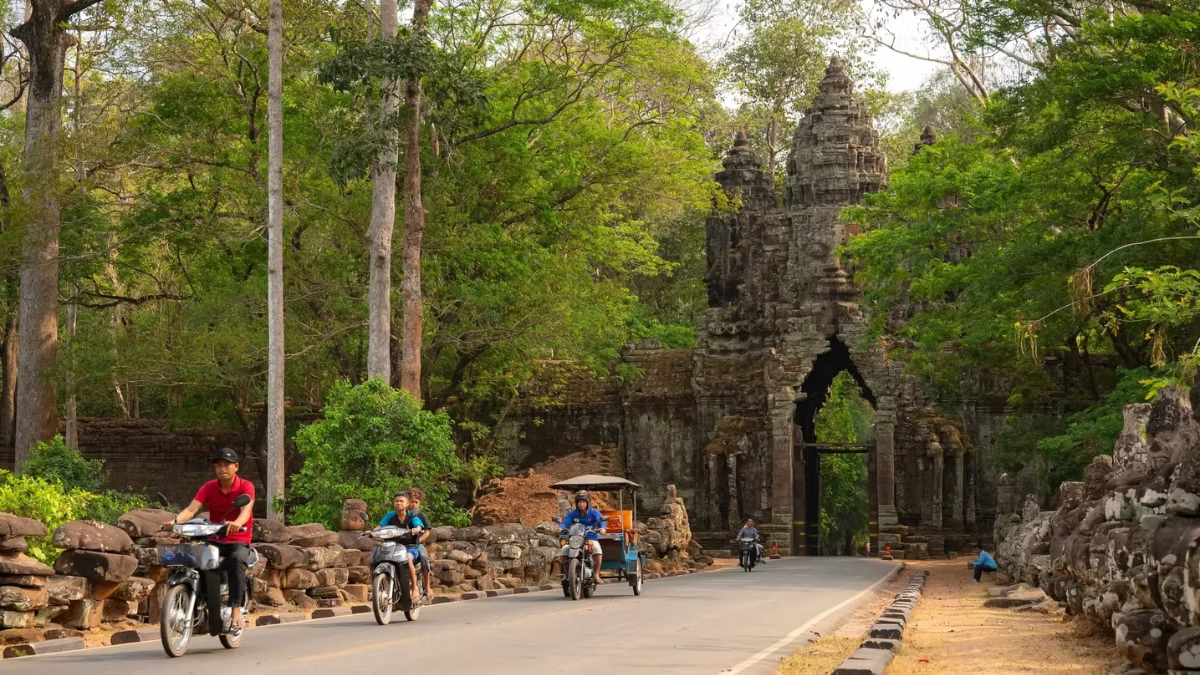
Transport Inside Angkor Archaeological Park — Tuk-Tuk, Bike or Car?

The most popular way to travel between temples inside the Angkor Archaeological Park is by hired tuk-tuk with a driver. A full-day tuk-tuk hire for the Small Circuit costs $20–25 and covers Angkor Wat, Bayon, and Ta Prohm. Bicycles are a popular and rewarding option for fit visitors in cooler months. Private air-conditioned cars ($40–70/day) are best for visitors with mobility needs or those heading to outlying temples over long distances. Tourists cannot drive their own motorbikes inside the park.
Once you are inside the Angkor Archaeological Park, the temples are spread across a large area — the Small Circuit alone is approximately 17 km, and the Grand Circuit extends to 26 km. Walking between temples is not practical; you will need transport to cover the distances between sites efficiently while conserving energy for the temples themselves.
The right choice depends on your fitness, budget, the season, and which temples you plan to visit. Each option has a distinct set of trade-offs — this guide breaks them down so you can plan accordingly.
Top Tickets
The Angkor Temple Circuits
Understanding the two main circuits helps you choose the right transport for your itinerary.
The Small Circuit (17 km from Siem Reap and return) covers the most important temples: Angkor Wat, Angkor Thom (including Bayon, Baphuon, and the Terraces), Ta Prohm, Banteay Kdei, and Srah Srang. This is manageable by bicycle for fit visitors; perfectly suited to a tuk-tuk; and a comfortable half-day in a private car.
The Grand Circuit (26 km from Siem Reap and return) extends beyond the Small Circuit to include Preah Khan, Neak Pean, Ta Som, Eastern Mebon, and Pre Rup. The greater distance and more spread-out temples make a tuk-tuk or private car more practical than a bicycle for most visitors.
Outlying temples — Banteay Srei (30 km north), Beng Mealea (40 km east), and Koh Ker (130 km northeast) — require a private car or organised day trip due to the distances and road conditions involved. See our Beng Mealea & Koh Ker day trip guide for details.
Option 1: Tuk-Tuk (Best Overall)
A hired tuk-tuk with driver is the best all-around transport option inside the Angkor Archaeological Park. It is affordable ($20–35/day depending on circuit), atmospheric, flexible, and the driver’s knowledge of the park adds genuine value. The driver waits at each temple while you explore and is ready to move on whenever you are. For the Small Circuit, a tuk-tuk is the default recommendation for most visitors.
Standard tuk-tuk rates inside the park:
- Small Circuit (Angkor Wat, Bayon, Ta Prohm, Banteay Kdei): $20–25/day
- Grand Circuit: $25–35/day
- Small + Grand Circuit combined: $30–40/day
- Banteay Srei extension (30 km north): add $10–15
- Beng Mealea extension (40 km east): add $20–25
Tips for your tuk-tuk hire:
- Book the night before through your guesthouse for a reliable, vetted driver
- Agree on the itinerary and price before departing — include which temples you want to visit
- A good driver will know optimal timing — which temple to hit at what time to avoid the worst crowds
- Tuk-tuks seat 2–4 passengers comfortably
- Bring cash — payment is always in USD or Cambodian riel, never by card
For a fully guided tuk-tuk experience with a licensed guide explaining each temple, consider the Angkor Wat Private Tuk-Tuk Tour.
Book This TourOption 2: Bicycle
Cycling within the Angkor Archaeological Park is permitted and, in the cooler months (November to February), is one of the most enjoyable ways to explore the temples. The roads within the park are quiet, mostly flat, and lined with shaded trees between major sites. The Small Circuit is approximately 17 km of cycling plus substantial walking inside each temple — a total of 20–25 km of physical activity. This is a rewarding but demanding option; not recommended in the hot season (March–May) or for anyone not comfortable cycling in heat.
Bicycles can be rented in Siem Reap from guesthouses, bicycle shops near the Old Market and Pub Street, and specialist cycling operators. Standard rental bicycles cost $3–5 per day; mountain bikes or hybrid bikes suitable for the park’s surfaces cost $5–8.
Cycling inside the park — what to know:
- The main roads connecting temples are sealed and mostly flat
- Some paths between secondary temples can be sandy or unpaved — manageable on a hybrid bike
- Shade trees line many sections of the road — a relief in the heat
- Parking bicycles is easy — designated areas exist outside each temple entrance
- Lock your bicycle when leaving it unattended (basic locks usually provided with rental)
- The ride from Siem Reap city to Angkor Wat is 5.5 km each way on a dedicated cycle path
Best cycling itinerary: For cyclists, the Small Circuit route — Angkor Wat → Angkor Thom → Ta Prohm → Banteay Kdei → back to Angkor Wat — is the recommended loop. Ride anticlockwise (Angkor Wat first, then Angkor Thom) to arrive at Ta Prohm in the late morning before peak crowds.
Guided cycling tours: For a structured cycling experience with a guide, the Bike the Angkor Temples full-day tour covers 30 km with a guide, transport to the start point, and lunch included.
Book This TourOption 3: Private Car
A private air-conditioned car with driver costs $40–70 per day inside the Angkor Archaeological Park. It is the most comfortable option and the recommended choice for visitors with mobility limitations, those visiting in the hot season, large groups, and anyone heading to outlying temples such as Banteay Srei, Beng Mealea, or Koh Ker. The main downside is cost — for a solo traveller or couple, a tuk-tuk offers almost identical logistics at half the price.
Cars are practical for:
- Visitors with mobility limitations (a car provides a stable, level boarding point; see our accessibility guide)
- Families with young children who need the comfort of enclosed, air-conditioned transport between temples
- Visits to outlying temples over 30 km from the park (Banteay Srei, Beng Mealea, Koh Ker, Phnom Kulen) where road conditions over long distances make a car significantly more comfortable
- Visiting in the hot season (March–May) when inter-temple transfers in an open tuk-tuk are unpleasant
Note: Cars cannot pull up directly to temple entrances in many cases — there is usually a short walk from the car park to the temple gate, often in direct sun. The difference in walking distance from car park to gate is minimal.
Option 4: Electric Bike (E-Bike)
Electric bikes are an increasingly popular option in Siem Reap. They offer the independence and atmosphere of cycling without the full physical effort — useful in warmer months or for visitors who want to cover more ground than a standard bicycle allows. E-bikes rent for $10–20 per day from specialist rental shops in Siem Reap. Check local rules on e-bike use inside the park before renting, as regulations can change.
Option 5: Motodop (Motorbike Taxi)
A motodop (motorbike taxi with passenger on the back) is the cheapest inter-temple transport option — drivers charge $8–12 for a full day. This is suitable for solo travellers comfortable on the back of a motorbike. It offers no shade, no luggage space, and no conversation with a knowledgeable driver. Most visitors opt for tuk-tuks for a more comfortable and social experience.
Walking Between Temples — Is It Possible?
Within individual temple complexes, all exploration is on foot — you will walk 2–8 km inside each major temple depending on how thoroughly you explore. Between temples, walking is only practical over very short distances — for example, the 500-metre walk between Ta Prohm and Banteay Kdei, or between the gates of Angkor Thom.
Walking the full Small Circuit (17 km) between temples is possible but not recommended given the heat and the energy required for temple exploration at each stop. Bicycle or tuk-tuk is a far more sustainable approach for a full day.
Which Transport Is Right for You?
| Visitor Type | Recommended Transport |
|---|---|
| First-time visitor (couple or small group) | Tuk-tuk |
| First-time visitor wanting context | Guided tour or guided tuk-tuk tour |
| Fit traveller, cool season, budget-conscious | Bicycle |
| Visitor with mobility limitations | Private car |
| Family with young children | Private car |
| Hot season visitor | Private car or air-conditioned guided tour |
| Solo budget traveller | Tuk-tuk or motodop |
| Outlying temples (Beng Mealea, Koh Ker) | Private car or organised day trip |
Frequently Asked Questions
Can tourists drive motorbikes inside the Angkor Archaeological Park?
No. Tourists are not permitted to drive their own motorbikes or rental scooters inside the Angkor Archaeological Park. You can hire a motodop driver to carry you, but self-driving is not allowed.
How much does a tuk-tuk cost for a full day at Angkor?
$20–25 for the Small Circuit (Angkor Wat, Bayon, Ta Prohm), $25–35 for the Grand Circuit. Agree on the price and itinerary before departing.
Is cycling safe inside the Angkor Archaeological Park?
Yes. The main roads within the park have relatively low traffic and are well-suited to cycling. The main risks are heat exhaustion (particularly in the hot season), and occasional sandy or uneven paths near secondary temples.
What is the best way to visit outlying temples like Beng Mealea?
A private car is the recommended option for outlying temples more than 30 km from the park. The distances and road conditions over 40–130 km make air-conditioned car travel significantly more comfortable than a tuk-tuk for these excursions.
How do I book a tuk-tuk for Angkor Wat?
Book through your guesthouse or hotel the night before — most properties have vetted drivers available. Alternatively, negotiate with drivers directly outside hotels, at the ticket office, or use the Grab app for a fixed-price booking.
