
Angkor Wat Rules & Visitor Etiquette — What You Must Know

The main rules at Angkor Wat are: cover shoulders and knees at all times (enforced); do not climb on the carved structures or bas-relief panels; remove shoes before entering the inner sanctuary; do not photograph monks or ceremonies without permission; do not touch the carvings; speak quietly inside the temple; and respect ongoing religious ceremonies by keeping a respectful distance. Visitors who violate the dress code, climb restricted areas, or behave disrespectfully can be asked to leave by APSARA Authority staff.
Angkor Wat is simultaneously a 900-year-old UNESCO World Heritage Site and a living, active Buddhist temple. Both identities shape the rules. The conservation rules protect one of humanity’s greatest cultural achievements from the impact of millions of visitors. The religious etiquette rules reflect the genuine spiritual significance of the site to Cambodian Buddhists.
This guide covers both sets of rules clearly and completely, so you can visit with confidence and respect.
Top Tickets
The Dress Code
Shoulders and knees must be covered to enter the inner temple areas at Angkor Wat. Sleeveless tops, shorts above the knee, sheer clothing, and midriff-exposing tops are not permitted. The dress code is actively enforced at the entrance to the inner galleries — visitors who do not comply will be refused entry. Sarongs are available from vendors at the entrance for a small cost.
This is the most frequently violated rule and the most consequential. Being turned back at the entrance to the inner sanctuary — the architectural heart of Angkor Wat — is a deeply frustrating experience that is entirely preventable.
Full dress code details, including what is and is not permitted and practical clothing advice for Cambodia’s heat, are covered in our dedicated dress code guide.
Prohibited Actions at Angkor Wat
Do not climb on the carved structures. This is the second most enforced rule. The ancient sandstone carvings — including the bas-relief panels, the decorative balustrades, and the structural elements of the galleries — are fragile. Climbing on or sitting on carved surfaces causes irreparable damage. APSARA Authority staff are present throughout the complex and will intervene. Persistent offenders can be removed from the site and their Angkor Pass cancelled.
Do not touch the carvings. The oils from human skin accelerate the deterioration of carved sandstone. “Do not touch” signs are present throughout the bas-relief galleries and inner sanctuaries. This applies to all carved surfaces — walls, pillars, doorways, and floor panels.
Do not remove stones, fragments, or any material from the site. Taking even a small stone from the Angkor complex is illegal under Cambodian law. The penalty is severe. This rule applies throughout the park.
Do not use flash photography inside the inner sanctuaries. Flash photography is prohibited inside the innermost sanctuary areas where Buddhist shrines and statues are located. Natural light photography and long-exposure photography without flash are permitted.
Drone use requires a permit. Flying a drone inside the Angkor Archaeological Park without a permit from APSARA Authority is illegal and results in confiscation of the drone. Commercial photography and filming also require permits.
Religious Etiquette
Remove shoes before entering the inner sanctuary. This applies to the innermost area of the central tower complex on the upper level, and to several other active worship spaces within the temple. Footwear must be left at the entrance. Slip-on shoes or sandals are significantly more convenient than lace-up boots for this reason.
Do not enter areas marked as restricted to worshippers. Some shrine areas inside the inner sanctuary are for the use of monks and worshippers only. These are clearly marked and must be respected.
Do not photograph monks or religious ceremonies without permission. Monks conducting ceremonies, meditating, or performing rituals are not tourist attractions. If you wish to photograph a monk, make eye contact and gesture a question — most monks will indicate whether they are comfortable being photographed. Do not photograph ceremonies without explicit permission.
Lower your voice inside the temple. Angkor Wat is a sacred space and an active place of worship. Loud conversation, shouting, or playing music from speakers is disrespectful and prohibited. This applies particularly inside the inner galleries and near active shrines.
Do not point your feet towards religious statues or shrines. In Buddhist culture, pointing feet towards a sacred object is considered deeply disrespectful. When sitting near a shrine, ensure your feet are pointed away from it.
Women and the upper sanctuary. The uppermost level of Angkor Wat was historically restricted to men. This restriction has been relaxed for tourists, but dress code requirements are enforced more strictly here than elsewhere in the complex.
Behaviour Rules for Conservation
Stay on marked paths. Inside the temple galleries and in areas with delicate stonework, stay on the designated visitor paths. Stepping off paths onto fragile stone surfaces or vegetated areas damages both the structure and the ecosystem of the site.
Do not attempt to access closed areas. Sections of the temple are periodically closed for restoration or conservation work. These closures are marked clearly and must be respected.
Do not bring food or drinks inside the main temple galleries. Eating and drinking (other than water) inside the galleries is not permitted. Food stalls and restaurants are available outside the main entrance.
Take your litter with you. Dispose of litter at the designated waste collection points outside the main temple structures, or carry it with you.
Rules Specific to Other Temples
Banteay Srei: Photography is permitted but access to the inner enclosure is controlled. Do not touch the carvings — the pink sandstone is particularly delicate and the carvings are of extraordinary artistic importance.
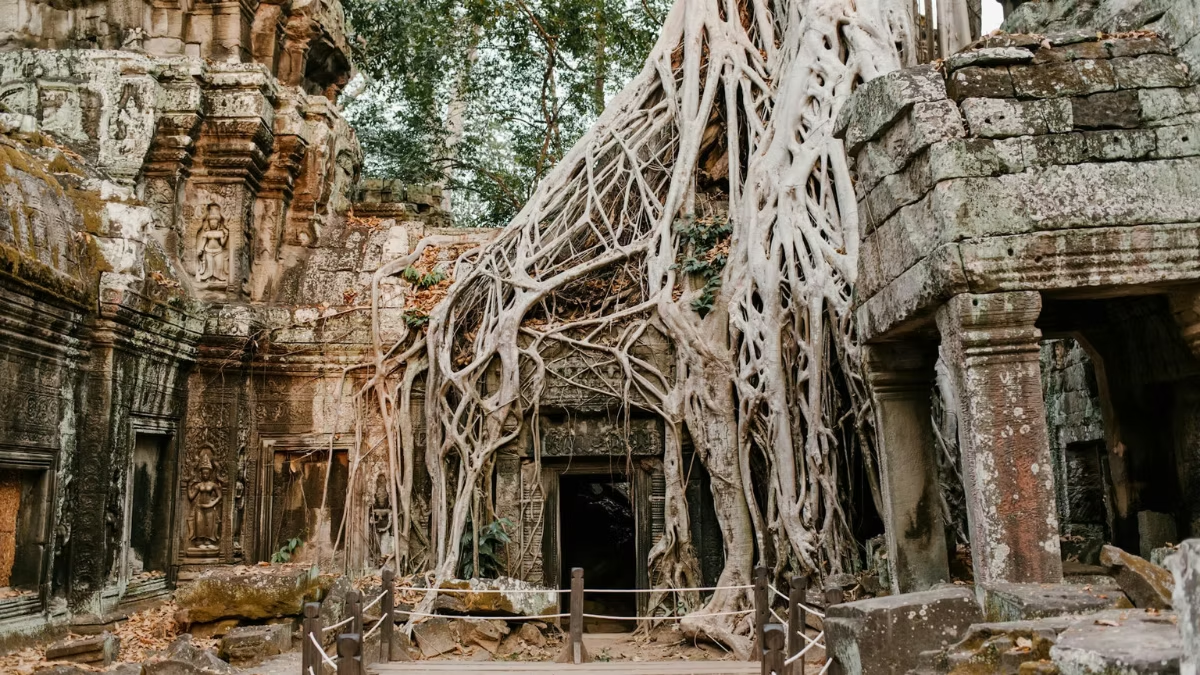
Ta Prohm: Stay on the designated boardwalks and paths. The tree roots that make Ta Prohm dramatic are also structurally fragile — walking on them causes damage.
Phnom Bakheng: The 300-person summit capacity is strictly enforced. Visitors may be asked to wait or turned away if the summit is at capacity.
What Happens If You Break the Rules?
APSARA Authority employs a significant number of staff throughout the Angkor Archaeological Park, and guards are present at the entrance to every major temple. Rules violations — particularly the dress code and climbing on structures — result in immediate intervention. Persistent violations or serious disrespect can result in removal from the complex and cancellation of your Angkor Pass (non-refundable).
Cambodia takes the conservation of the Angkor Archaeological Park extremely seriously. It is one of the country’s most important cultural assets and its primary source of tourism revenue. The rules exist to protect a site that belongs not just to Cambodia but to all of humanity.
Frequently Asked Questions
What is not allowed at Angkor Wat?
Sleeveless tops and shorts above the knee (dress code); climbing on carvings or stone structures; touching the bas-reliefs; removing material from the site; flash photography in inner sanctuaries; drone use without a permit; eating inside the main galleries; loud behaviour. All of these are enforced and may result in removal from the site.
Can I take photos at Angkor Wat?
Yes. Personal photography with any camera equipment is freely permitted throughout the Angkor Archaeological Park. Flash photography is prohibited in the inner sanctuaries. Drone photography requires a permit from APSARA Authority. Commercial photography and filming also require permits.
Do I need to remove my shoes at Angkor Wat?
Yes — shoes must be removed before entering the inner sanctuary on the upper level (the central tower complex). You will see clear signage and other visitors removing their shoes at this point. Slip-on shoes or sandals are far more practical than lace-up boots.
Can I touch the carvings at Angkor Wat?
No. Touching the carved surfaces is prohibited throughout the Angkor complex. The oils from human skin accelerate deterioration of the ancient sandstone. “Do not touch” signs are present throughout the bas-relief galleries.
Is it disrespectful to visit Angkor Wat?
Not if you follow the rules and approach the site with genuine respect. Angkor Wat is an active place of Buddhist worship — dressing modestly, behaving quietly, respecting the monks and worshippers, and not treating the sacred spaces as a backdrop for casual photographs are the key ways to ensure your visit is respectful.
What happens if I break the dress code at Angkor Wat?
You will be refused entry to the inner gallery areas by guards stationed at the entrance. You will not be turned away from the site entirely, but you will miss the inner sanctuary — the most architecturally significant part of the temple. Sarongs are available from vendors at the entrance and can be purchased to gain compliance.
