
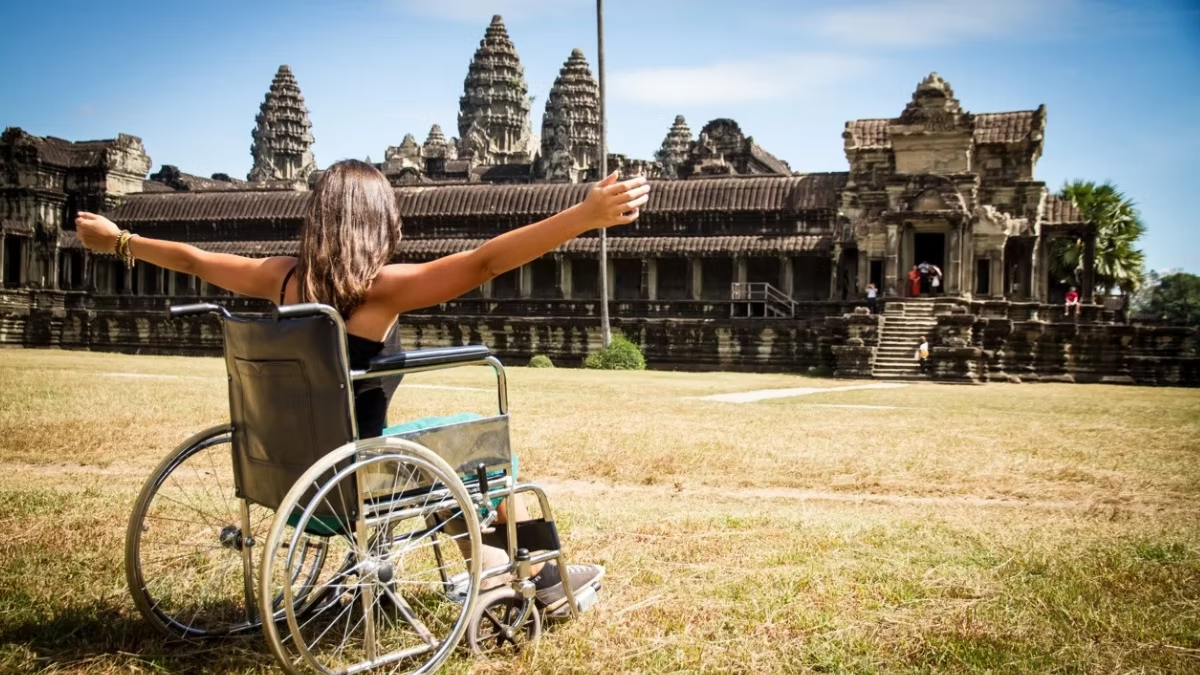
Angkor Wat Accessibility Guide — Visiting with a Disability

Angkor Wat is only partially accessible for visitors with mobility impairments. The causeway and outer gallery of the main temple are accessible by wheelchair on a flat stone surface, but the inner sanctuary and upper levels involve steep stone stairs with no lifts or ramps. Most other temples in the Angkor Archaeological Park have similar limitations — impressive ground-level areas are broadly accessible, but upper tiers and inner sanctuaries are not. With careful planning, visitors with a range of disabilities can still have a deeply rewarding experience.
The Angkor Archaeological Park is a 900-year-old UNESCO World Heritage Site. It was not designed with modern accessibility standards in mind, and retrofitting ramps and lifts into its ancient stone structures is both structurally and culturally inappropriate. That said, many aspects of an Angkor visit are accessible to visitors with mobility impairments, and with the right planning — choosing the right temples, hiring a private vehicle, and knowing exactly what to expect — a visit can be both meaningful and achievable.
This guide is written to give visitors with disabilities, mobility challenges, or those travelling with elderly companions an honest, detailed picture of what is and is not accessible — so you can plan with confidence rather than arrive with false expectations.
Top Tickets
Wheelchair Accessibility at Angkor Wat
The main causeway and outer gallery level of Angkor Wat are navigable by wheelchair on smooth, flat stone paving. The outer enclosure wall, the main causeway (approximately 350 metres long), and the first and second gallery levels can be accessed on level surfaces. However, reaching the upper level of the temple — the third tier and the central sanctuary — requires climbing very steep, narrow stone stairs with no handrails or alternative access. This upper level is not accessible by wheelchair and is challenging for anyone with significant mobility limitations.
Angkor Wat is built on three ascending levels, each requiring a climb to access. The transition from the ground level to the second gallery involves stone steps. The transition to the third gallery — the most sacred area, which houses the central tower complex — involves extremely steep stairs, in some cases at a near-vertical angle. These were designed to symbolise the difficulty of ascending to the realm of the gods, and they are steep by any modern standard.
What is accessible by wheelchair at Angkor Wat:
- The full length of the main causeway (approximately 350 metres, flat stone surface)
- The outer enclosure level and its galleries
- The reflecting pools and surrounding moat area
- The ground-level exterior of the temple, including views of all five towers
- The outer bas-relief galleries on the first level (some sections on flat paved surfaces)
What is not accessible by wheelchair:
- The upper two levels of the central temple structure
- The inner sanctuary and central tower complex
- Several gallery sections that require stepping over stone thresholds
Even if the upper levels are not accessible, the view of the five towers from the causeway and the outer enclosure is spectacular, and the ground-level bas-reliefs in the outer gallery represent some of the finest artistic achievements in the ancient world. A visitor who cannot access the upper levels can still have a profound experience at Angkor Wat.
Terrain and Surface Conditions
Understanding the terrain across the Angkor complex is critical for planning an accessible visit.
Main causeway (Angkor Wat): Smooth, flat stone paving — manageable for wheelchairs and walkers.
Outer gallery paths: Generally flat and paved, but with occasional stone thresholds and uneven joins between stone blocks. A standard manual wheelchair can navigate most of this with assistance.
Paths between temples: Surfaced roads connect the major temples. A private vehicle (car rather than tuk-tuk) is strongly recommended for visitors with mobility limitations — it provides a smooth, level boarding surface and can pull up close to temple entrances.
Jungle paths and outlying temples: Paths to outlying temples such as Beng Mealea and Koh Ker are significantly less developed and not suitable for wheelchairs or mobility aids. These are not recommended for visitors with significant mobility challenges.
Wet season conditions: During the wet season (May to October), unpaved sections between and within some temples can become muddy and slippery. Stone surfaces may also be slick. This is an important consideration for visitors with walking difficulties.
The Most Accessible Temples in the Angkor Archaeological Park
Some temples offer significantly better accessibility than others. The following are the most rewarding for visitors with mobility limitations:
Angkor Wat (ground level) — The causeway, outer enclosure, and bas-relief galleries at ground level are excellent. The upper sanctuary is not accessible. Even from the ground, the scale and beauty of the temple is extraordinary.
Bayon Temple — The iconic stone faces at Bayon are visible from ground level and the first gallery tier. Some sections are accessible on flat stone paths. The upper gallery requires steps, but even from the lower level the temple is immensely impressive.
Ta Prohm — The most famous feature of Ta Prohm — the vast tree roots engulfing the stone galleries — is visible from ground level and partially accessible on flat paths. Several inner corridors require stepping over thresholds. The atmosphere is remarkable even from accessible areas.
Banteay Kdei — A lower-lying temple with relatively flat internal paths. Many of its corridors are accessible at ground level. Less visited than the major sites, which means less congestion on pathways.
Srah Srang — The sacred lake adjacent to Banteay Kdei has a wide, flat stone terrace at the water’s edge. It is one of the most peaceful and accessible spots in the entire park for a wheelchair user, with expansive views across the water to the surrounding jungle.
Preah Khan — A sprawling, largely flat temple with long corridors at ground level. Many of its best features — the two-storey library, the long columned halls, the fig trees growing through the stonework — are accessible on flat paths.
Angkor Thom (gates and terraces) — The South Gate of Angkor Thom, with its row of gods and demons flanking the causeway, is accessible from a vehicle and partially on foot on a flat surface. The Terrace of the Elephants and the Terrace of the Leper King are also largely accessible at ground level.
Transport Recommendations for Visitors with Disabilities
Private car (highly recommended): For visitors with mobility limitations, a private air-conditioned car is strongly recommended over a tuk-tuk. Cars can pull directly to temple entrances, provide a stable, level surface for getting in and out, and offer a rest from the heat between temples. Costs run approximately $40–70 per day for a private car with driver, compared to $20–30 for a tuk-tuk.
Wheelchair hire in Siem Reap: Manual wheelchairs can be hired from some guesthouses and medical supply shops in Siem Reap. If you are bringing your own wheelchair, folding lightweight models are strongly recommended over heavy power chairs, given the stone and uneven surfaces. Power wheelchairs face significant challenges on the ancient stone paths.
Private guided tour: A private guided tour is the most comfortable and manageable option for visitors with disabilities. A good guide will know exactly which areas are accessible, will assist with navigation, and will ensure the itinerary is paced appropriately. Angkor Wat private tours can be tailored to mobility requirements on request.
Tips for Visitors with Specific Conditions
For wheelchair users: Focus on the ground-level areas of Angkor Wat, Bayon, Ta Prohm, Preah Khan, and Srah Srang. Hire a private car rather than a tuk-tuk. Visit early morning (7:00–9:30 AM) when the stone surfaces are cooler and crowds are lighter, making navigation easier. Bring a companion who can assist with occasional steps and thresholds.
For visitors with walking difficulties: Bring a folding walking stick or trekking poles, which are invaluable on uneven stone surfaces. Wear shoes with good grip — some of the ancient stone is polished smooth and can be slippery, particularly after rain or early morning dew. Identify shaded resting spots in advance; the bas-relief galleries at Angkor Wat are shaded and have ledges that can serve as rest stops.
For visitors with visual impairments: The tactile richness of Angkor’s carved surfaces is extraordinary — though touching the carvings is prohibited in most areas. A highly knowledgeable guide can make the experience profoundly meaningful through detailed verbal description. Many of the most famous temple spaces — the causeway, the moat, the face towers of Bayon — are powerful experiences for those with limited vision when accompanied by expert narration.
For visitors with heart conditions or breathing difficulties: The heat is the primary challenge. Schedule visits for early morning (before 10:00 AM) or late afternoon (after 3:30 PM). Take the midday hours to rest in an air-conditioned space in Siem Reap. Avoid the steep stair climbs at Angkor Wat’s upper levels if you have cardiovascular limitations — the ground-level experience is fully rewarding without them.
For elderly visitors: Many elderly visitors have one of the most meaningful experiences of their lives at Angkor Wat. Focus on a relaxed pace, early starts, good footwear, sun protection, and a private vehicle. Two or three hours per temple per day is a comfortable amount for most visitors with limited stamina.
Facilities at the Angkor Archaeological Park
Toilets: Clean, modern toilet facilities are available at the ticket office, near Angkor Wat’s main entrance, and at a number of other points around the park. Most are accessible at ground level.
Restaurants and cafés: Several restaurants operate along the road between Angkor Wat and Angkor Thom. These are accessible by vehicle and offer rest stops in the shade.
Drinking water: Essential in Cambodia’s heat. Clean bottled water is available from vendors throughout the park. Bring a refillable bottle to supplement.
Medical assistance: The nearest hospital facilities are in Siem Reap city. Ensure you have adequate travel insurance that covers medical evacuation if needed.
Frequently Asked Questions
Is Angkor Wat wheelchair accessible?
Partially. The main causeway, outer enclosure, and ground-level galleries at Angkor Wat are navigable by wheelchair on flat stone paving. The upper sanctuary and inner levels involve steep stone stairs with no ramps or lifts and are not accessible by wheelchair. Even from the ground level, however, the experience is extraordinary.
What is the most accessible temple at Angkor?
Srah Srang (the sacred lake), Preah Khan, and the ground levels of Angkor Wat and Ta Prohm offer the best accessibility. Srah Srang in particular has a wide, flat stone terrace at water level with beautiful views and no stairs.
Can I rent a wheelchair at Angkor Wat?
Wheelchairs are not available to rent at the Angkor Archaeological Park itself. Manual wheelchairs can be hired from some guesthouses and medical supply outlets in Siem Reap before your visit. Bring your own if possible, ideally a lightweight folding model.
What transport is best for a visitor with mobility limitations?
A private air-conditioned car is the most practical and comfortable option. It provides a stable, level entry point, can stop directly at temple entrances, and allows rest in air-conditioned comfort between temples. Tuk-tuks require a step up and can be bumpy. Private tours can accommodate specific mobility requirements on request.
Are the steps at Angkor Wat very steep?
Yes. The steps to the upper levels of Angkor Wat are famously steep — designed to represent the difficulty of ascending to the realm of the gods. The stairs to the third tier are near-vertical in some sections. Wooden staircases with handrails have been installed at some access points, but even with these aids, the ascent requires confidence and physical ability. Anyone with knee, hip, or balance issues should consider whether the upper level is right for them.
Is Angkor Wat accessible for visitors with visual impairments?
With a skilled guide providing detailed verbal description, an Angkor Wat visit can be an extraordinarily rich experience for visitors with visual impairments. The tactile scale of the temple — the moat, the causeway, the sheer height of the towers, the texture of the carved stone walls — is perceivable in many dimensions beyond sight. A private guide who specialises in accessible or sensory tours is strongly recommended.
Is there a discount for visitors with disabilities?
The Angkor Pass is priced uniformly for all adult international visitors ($37/1-day, $62/3-day, $72/7-day). There is no dedicated disability discount. Children under 12 enter free.
