
Angkor Wat Photography Tips — Best Spots, Light & Timing

The best photography at Angkor Wat happens during two golden windows: sunrise (5:30–7:00 AM) for the iconic reflecting pool silhouette, and late afternoon (4:00–5:45 PM) for warm light on the western façade. The most photographed spot is the north reflecting pool at sunrise; the most underrated is the inner gallery at 8:00 AM, when light filters through the doorways in long, golden shafts. Avoid midday (11:00 AM–2:00 PM) — harsh overhead light creates flat, unattractive shadows on the carved stone surfaces.
Angkor Wat is one of the most photographed sites in the world, and for good reason — the combination of extraordinary architecture, tropical light, and dramatic scale creates remarkable photographic opportunities at almost every hour of the day. This guide covers the best positions, the best times, and the practical tips that separate memorable Angkor photographs from the ones every tourist takes.
The Best Photography Spots at Angkor Wat
1. The North Reflecting Pool at Sunrise
The most iconic Angkor Wat photograph: the five towers reflected in the north pool, silhouetted against a brightening sky in shades of orange, pink, and purple. This is why millions of people set their alarm for 4:30 AM.
How to get there: Walking east along the main causeway, the north pool is on your left approximately 100 metres before the main entrance gopura. The best positions are along the northern bank of the pool, facing east towards the towers.
Timing: Arrive by 5:00–5:15 AM during most of the year; 4:45 AM in peak months (December and January) to secure a front-row position. The reflection is best from approximately 5:30–6:30 AM depending on cloud cover and season.
Photography notes: A wide-angle lens (16–35mm equivalent on a full-frame camera, or 10–22mm on APS-C) captures both the towers and the reflection comfortably. A tripod is essential for the pre-dawn period before there is sufficient light for hand-held shooting. Exposure: start at ISO 400–800, f/8, 2–8 seconds and adjust based on the brightening sky.
The south pool: Less crowded than the north, with a slightly different angle. Both pools offer excellent sunrise compositions — if the north is packed, the south is your alternative.
2. The Causeway at Sunrise and Late Afternoon
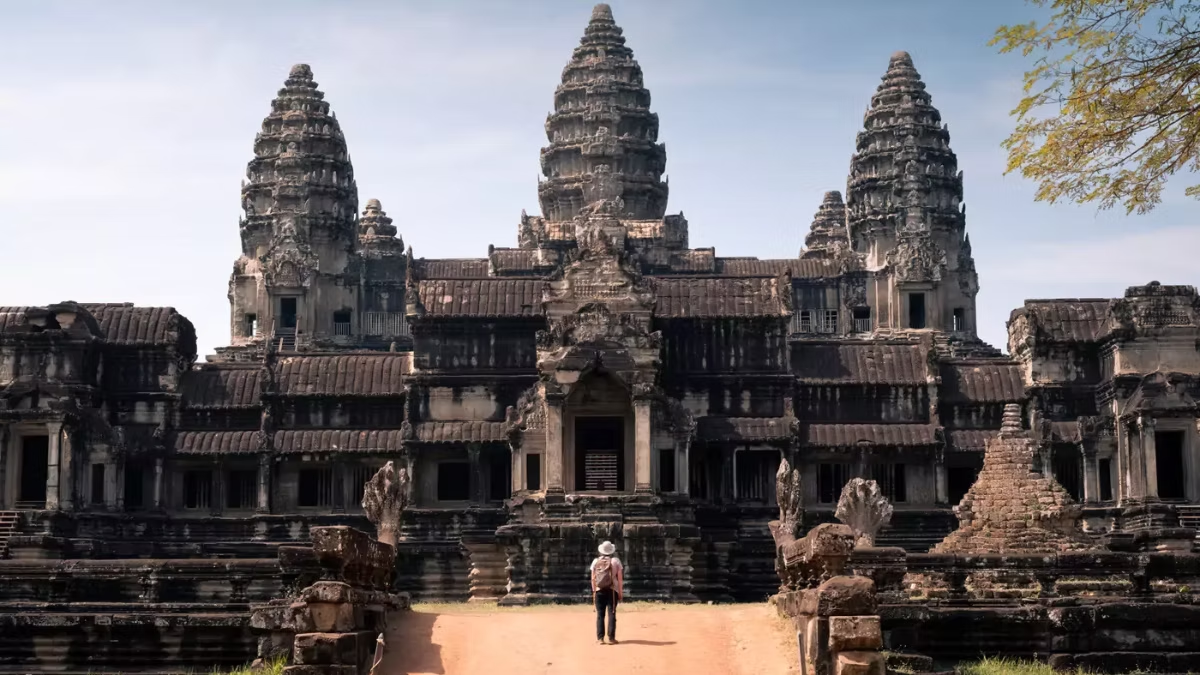
The main western causeway — 350 metres of stone walkway flanked by nāga balustrades, leading directly to the towers — is one of the great straight-line photographic compositions in architecture. In the early morning and late afternoon, the causeway recedes into the haze in front of the towers in a way that is cinematically powerful.
Timing: Works at sunrise (light coming from behind you as you face east) and in late afternoon (4:00–5:45 PM, when the westering sun illuminates the main façade directly in front of you as you face east towards the towers).
Positioning: Centre yourself on the causeway and use the symmetry of the nāga balustrades to frame the towers. Include people walking away from you for scale — the towers become dramatically larger by comparison.
3. The Inner Gallery Doorway Shots
One of the most underrated and least-photographed moments at Angkor Wat is the interplay of light through the stone doorways inside the gallery system, particularly between 7:30 and 10:00 AM. Long shafts of golden morning light pierce the stone corridors, illuminating dust particles and creating a chiaroscuro effect on the carved walls.
Where to find them: The corridors connecting the outer and inner galleries, and the doorways between the gallery chambers on the second level. Look for east-facing doorways in the early morning when the sun is behind them.
Photography notes: Silhouette a figure (your guide, another visitor, or yourself with a self-timer) in the doorway for scale and drama. Expose for the bright area outside the door and let the interior fall dark.
4. The Bas-Relief Galleries
The 800 metres of bas-relief carvings in the outer gallery are best photographed in the late morning (9:00–11:00 AM) or late afternoon (3:00–5:00 PM), when raking sidelight emphasises the depth of the carving and brings the narrative scenes to life. Avoid direct overhead light at midday.
Technique: Get close. Fill the frame with a single panel or a group of figures — the detail in the carvings rewards close examination. Avoid wide shots that reduce the carvings to a flat pattern.
5. The Upper Gallery — Tower Views
From the upper gallery (third level), the views over the surrounding Angkor plain are extraordinary. Photograph the four corner towers from the upper gallery walkway. In the early morning, mist frequently lies over the surrounding jungle — a dramatic backdrop.
Note: Steep stairs with high foot traffic make tripod use impractical on the upper level. A steady hand and a high ISO (1600–3200) allow hand-held shooting in the lower light of the interior areas.
Photography at Other Angkor Temples
Bayon Temple
The giant stone faces at Bayon are best photographed in the morning (7:30–10:00 AM) when the light rakes across the carved stone, emphasising the three-dimensionality of the faces. Faces on the upper terrace catch direct light earlier than those at ground level.
Key shot: Frame a single face close-up, filling the frame, with another face partially visible behind it. This captures the famous “sea of faces” quality without losing individual expression.
Ta Prohm
The dramatic tree roots engulfing the stone galleries are best photographed in the late morning (9:00–11:00 AM) when dappled light filters through the jungle canopy above. The two most famous tree-root compositions have designated viewing platforms — arrive early (before 8:30 AM) or late afternoon (after 3:30 PM) to photograph them without large groups in the frame.
Technique: Include a person for scale — the trees are enormous, and the scale is lost without a human reference.
Banteay Srei
The red sandstone carvings at Banteay Srei are at their most vivid in the warm light of late afternoon (3:00–5:30 PM), when the stone glows orange-gold. Morning is also excellent. Midday flattens the colour and reduces the relief of the carvings.
Note: Photography is permitted throughout Banteay Srei but touching the carvings is strictly prohibited.
Practical Photography Tips
Drone photography: Drones require special permits in the Angkor Archaeological Park, issued by APSARA Authority. Flying without a permit results in confiscation of equipment. Apply well in advance of your visit if drone photography is a priority.
Commercial photography: Requires a separate permit. Personal photography with any equipment — including professional cameras and tripods — is freely permitted for personal use.
Lens recommendations: A wide-angle (16–35mm equiv.) for architecture and landscapes; a standard zoom (24–70mm equiv.) for the bas-reliefs and portraits; a telephoto (70–200mm equiv.) for compressing distant towers and isolating details. A 50mm prime is excellent for low-light gallery work.
Protect your equipment: Humidity is high, particularly in the wet season. Use silica gel packets in your camera bag overnight. In rain, keep cameras in a waterproof bag or under a rain cover.
The Golden Hour Photoshoot: For visitors who want professionally guided photography at the temples — including optimal positioning, timing, and a photographer who can take portraits of you at the best locations — the Angkor Wat Golden Hour Photoshoot offers exactly this.
Book This TourFrequently Asked Questions
What is the best time for Angkor Wat photography?
Sunrise (5:30–7:00 AM) for the iconic reflecting pool shot and the morning golden hour. Late afternoon (4:00–5:45 PM) for the western façade in warm light. The inner gallery doorway shots are best at 7:30–10:00 AM. Avoid midday (11:00 AM–2:00 PM) — harsh overhead light flattens carvings and creates unflattering shadows.
Can I use a tripod at Angkor Wat?
Yes, for personal use. Tripods are permitted throughout the archaeological park. On the upper gallery (third level), high foot traffic makes tripod use difficult during busy periods. Tripods are most useful at the reflecting pool before and during sunrise.
Is drone photography allowed at Angkor Wat?
Drone photography requires a permit from APSARA Authority. Flying without a permit results in equipment confiscation. Apply well in advance if drone photography is essential to your visit.
What camera settings should I use for Angkor Wat sunrise?
Start with ISO 400–800, f/8, and a shutter speed of 2–8 seconds on a tripod in the pre-dawn darkness. As the sky brightens, reduce ISO and increase shutter speed accordingly. Shoot in RAW format for maximum flexibility in post-processing the wide dynamic range between the bright sky and dark temple.
What is the best spot for Angkor Wat sunrise photography?
The north reflecting pool, positioned on the north bank facing east, is the classic spot. Arrive by 5:00–5:15 AM to secure a good position. The south reflecting pool is less crowded. The causeway itself offers a different but equally compelling composition.
