
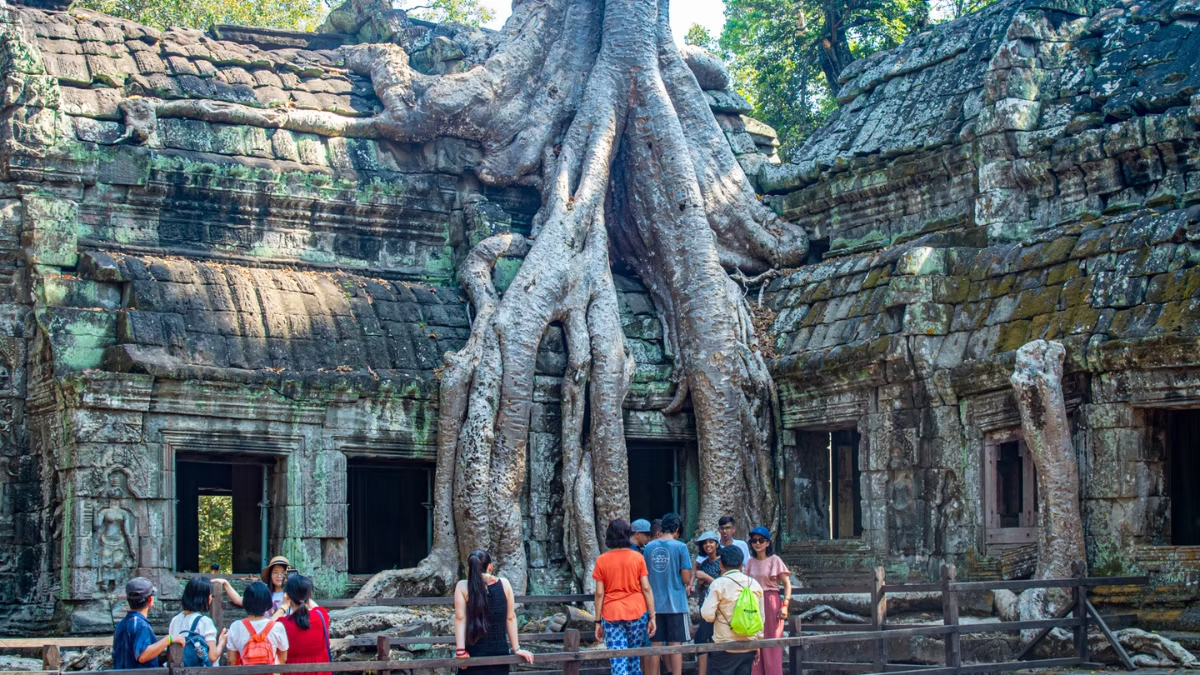
What to Expect at Angkor Wat — First-Time Visitor Guide

Visiting Angkor Wat for the first time involves purchasing an Angkor Pass at the ticket office or online, passing through a ticket checkpoint at the temple entrance, and then exploring a vast stone complex on foot. The main temple takes 2–4 hours to explore thoroughly. Expect heat, crowds during peak hours (9:00 AM–2:00 PM), steep stairs to the upper levels, a dress code requiring covered shoulders and knees, and an experience that almost every visitor describes as exceeding expectations.
No amount of photographs or travel writing fully prepares you for Angkor Wat. The five towers are larger than they look in pictures. The causeway is longer. The bas-reliefs are more intricate. The heat is more intense. And the experience, for the overwhelming majority of visitors, is more affecting than they anticipated.
This guide walks you through exactly what happens from the moment you arrive at the Angkor Archaeological Park to the moment you leave — so your first visit is informed, practical, and leaves room to simply be amazed.
Top Tickets
Step 1: Getting Your Angkor Pass
Before entering Angkor Wat or any other temple in the Angkor Archaeological Park, you must have a valid Angkor Pass. Passes cost $37 for one day, $62 for three days (valid over a 10-day window), or $72 for seven days (valid over 30 days). They are available at the main ticket office on Apsara Road (open 4:30 AM–5:30 PM), online at ticket.angkorenterprise.gov.kh, or at self-service kiosks at Heritage Walk Mall in Siem Reap. Your photograph is taken or uploaded at the time of purchase and printed on the pass — it is non-transferable.
If you are visiting sunrise, buy your pass the afternoon or evening before your visit. The ticket office opens at 4:30 AM, but queues in peak season can mean a 20–30 minute wait — time you would rather spend at the reflecting pool. A pass purchased after 5:00 PM the previous day is valid immediately and through the following day.
For a full breakdown of pass types, costs, and what is included, see our Angkor Pass guide.
Step 2: Getting to the Temple
Most visitors travel from Siem Reap to Angkor Wat by tuk-tuk, which takes approximately 15–20 minutes from the city centre. Private cars and bicycles are also options. The journey from the ticket office to the main temple entrance is a further 2–3 minutes by vehicle. Your driver will drop you at the western entrance to the main causeway.
See our complete guide to getting to Angkor Wat from Siem Reap for transport costs, options, and logistics.
Step 3: The Ticket Checkpoint
Your Angkor Pass will be scanned at the entrance to the main temple. Guards check that the photograph on the pass matches the person presenting it — the system is efficient and the process takes only seconds. Passes are checked at the entrance to each major individual temple throughout the park, not at the park boundary itself.
Step 4: The Main Causeway
Walking through the main western gate and onto the causeway is the first genuinely stunning moment of the visit. The causeway stretches approximately 350 metres ahead of you, flanked by stone railings in the form of nāga serpents, with the five towers of Angkor Wat rising at the far end. Reflecting pools sit to the north and south of the causeway — the north reflecting pool is where the iconic sunrise photograph is taken.
The causeway walk itself takes 5–10 minutes. Most visitors stop frequently for photographs. In the early morning, you will be walking with a crowd; by mid-morning, the foot traffic is at its peak.
Step 5: The Temple Layout
Angkor Wat is built on three ascending levels, each enclosed by a rectangular gallery. The ground level contains the famous bas-relief galleries — 800 metres of intricately carved narrative panels. The second level is an inner courtyard. The third and highest level supports the five towers and the central sanctuary. Reaching the upper level requires climbing steep stone stairs. The total complex is approximately 800 metres by 1,025 metres at the outer enclosure.
Understanding the layout in advance makes navigation significantly easier:
Outer enclosure and moat: The first thing you pass through is the outer enclosure wall, accessed via the main western gate. The moat surrounding the entire complex is 200 metres wide.
Ground level — the bas-relief galleries: Just inside the main enclosure, the outer gallery walls are carved with the famous bas-reliefs. Walking the full circuit takes 45–60 minutes. The most celebrated panels — including the Churning of the Ocean of Milk and the Army of Suryavarman II — are in the southern and western galleries. Read our bas-reliefs guide before your visit to understand what you are looking at.
Second level: Reached by a short staircase, the second level is a raised courtyard with four small ponds and views of the upper towers. Less visited than the ground level — worth taking time here.
Third level and central sanctuary: The highest accessible level, reached by steep stone stairs (wooden stairs with handrails have been installed at one access point). The views from the upper gallery over the surrounding Angkor plain are extraordinary. The central sanctuary houses several Buddha images and is an active place of Buddhist worship. Remove shoes before entering the inner sanctuary.
What the Crowds Are Like
Angkor Wat receives over one million visitors per year. During peak months (December and January), daily ticket sales can approach and exceed pre-COVID levels of approximately 7,000 per day. This means:
At sunrise (5:00–7:00 AM): The reflecting pool area is crowded during peak season. The causeway and outer temple areas are busy but manageable. By 7:00 AM, the post-sunrise tour groups are already moving on to Bayon.
Mid-morning (9:00–11:00 AM): The busiest period of the day. Tour buses have arrived, and the outer galleries and causeway are at maximum capacity.
Midday (11:00 AM–2:00 PM): Still busy, but many visitors retreat to restaurants. The heat keeps some groups away. This is actually a reasonable time to visit the shaded bas-relief galleries.
Late afternoon (3:30–5:45 PM): Crowds thin significantly. This is one of the best and most underused visiting windows, particularly for photography — the western light illuminates the main façade directly.
For a detailed crowd guide with seasonal patterns, see Angkor Wat Crowds — When Is It Least Busy?
The Heat: What to Expect and How to Cope
Cambodia is tropical. Even in the coolest months (December–February), midday temperatures inside the temple complex reach 28–32°C. In the hot season (March–May), they regularly exceed 38°C. Stone surfaces absorb and radiate heat. There is limited shade in the open courtyard areas.
Practical heat management:
- Arrive early — the first 2–3 hours of the day are dramatically cooler
- Use the shaded bas-relief galleries as rest points during the hottest hours
- Carry at least 1.5 litres of water per person; vendors sell water throughout the complex
- Wear a hat and apply high-SPF sunscreen before entering
- Take the midday break seriously — return to an air-conditioned restaurant in Siem Reap between 12:00 PM and 3:00 PM if you have a multi-day pass
The Dress Code
All visitors must cover shoulders and knees to enter the inner gallery areas. Enforcement is active at Angkor Wat — visitors who do not comply will be turned back at the entrance to the inner galleries. This is enforced regardless of the heat.
Lightweight linen or cotton trousers paired with a sleeved T-shirt are the standard solution. Sarongs are available from vendors at the entrance for a small cost if you have not prepared. For full details, see our dress code guide.
Shoes and the Inner Sanctuary
Remove your shoes before entering the inner sanctuary (the central area on the upper level). Slip-on shoes or sandals are strongly recommended over lace-up trainers.
The Monks
Angkor Wat is an active Buddhist temple. You will see monks in saffron robes throughout the complex — praying, conducting ceremonies, and going about their daily lives. They are not tourist attractions. Observe quietly and respectfully, do not photograph monks without permission, and do not interrupt ceremonies.
What You Will Actually Feel
Most first-time visitors describe the same arc: initial awe at the causeway and towers, gradual absorption as the detail of the bas-reliefs reveals itself, physical tiredness from the heat and walking, and — for the majority — a sense that it was one of the most remarkable places they have ever been.
The scale is genuinely hard to comprehend until you are inside. The artistry of the carvings reveals more and more the longer you look. The spiritual atmosphere is palpable even in the crowds. And the moment the sun clears the towers at sunrise, or the late afternoon light turns the sandstone gold — those are the moments that stay with you.
Frequently Asked Questions
How long does a visit to Angkor Wat take?
A thorough visit to the main Angkor Wat temple takes 3–4 hours at a comfortable pace, including the bas-relief galleries, the inner courtyards, and the upper level. Budget 2 hours minimum for a highlights-only visit. Most visitors combine Angkor Wat with at least one other temple on the same day — the full Small Circuit takes a full day.
What should I bring to Angkor Wat?
Bring your Angkor Pass, a hat, sunscreen, at least 1.5 litres of water, comfortable shoes that are easy to remove, and clothing that covers shoulders and knees. A small daypack is useful. Cash (USD or Cambodian riel) for food, water, and tips. A camera or charged smartphone.
Is Angkor Wat safe to visit?
Yes. Angkor Wat is one of the safest tourist destinations in Southeast Asia. Petty theft is rare but possible in very crowded conditions — keep bags close. The site is well-managed by APSARA Authority and Angkor Enterprise staff.
Can I eat inside Angkor Wat?
Food and drinks (other than water) are not permitted inside the main temple galleries. Restaurants and food stalls are located outside the temple entrance and along the main road between Angkor Wat and Angkor Thom. Plan a proper lunch break between 12:00 PM and 2:00 PM in one of these locations.
Do I need a guide at Angkor Wat?
You do not need a guide, but a knowledgeable guide substantially enriches the experience. The bas-reliefs alone contain hundreds of narrative scenes that are meaningless without context. Many visitors who visit independently return wishing they had invested in a guide. Full-day guided tours are available from Siem Reap for all budgets.
Is photography allowed at Angkor Wat?
Yes. Personal photography is freely permitted throughout Angkor Wat and the Angkor Archaeological Park. Commercial photography and drone use require special permits. Tripods may be restricted in some inner areas.
How physically demanding is Angkor Wat?
Moderately demanding. A full visit involves 4–8 km of walking over uneven stone surfaces, plus climbing steep stairs to the upper level. The heat significantly increases the physical toll. Visitors with mobility limitations can still access substantial portions of the temple at ground level. See our accessibility guide for details.
