
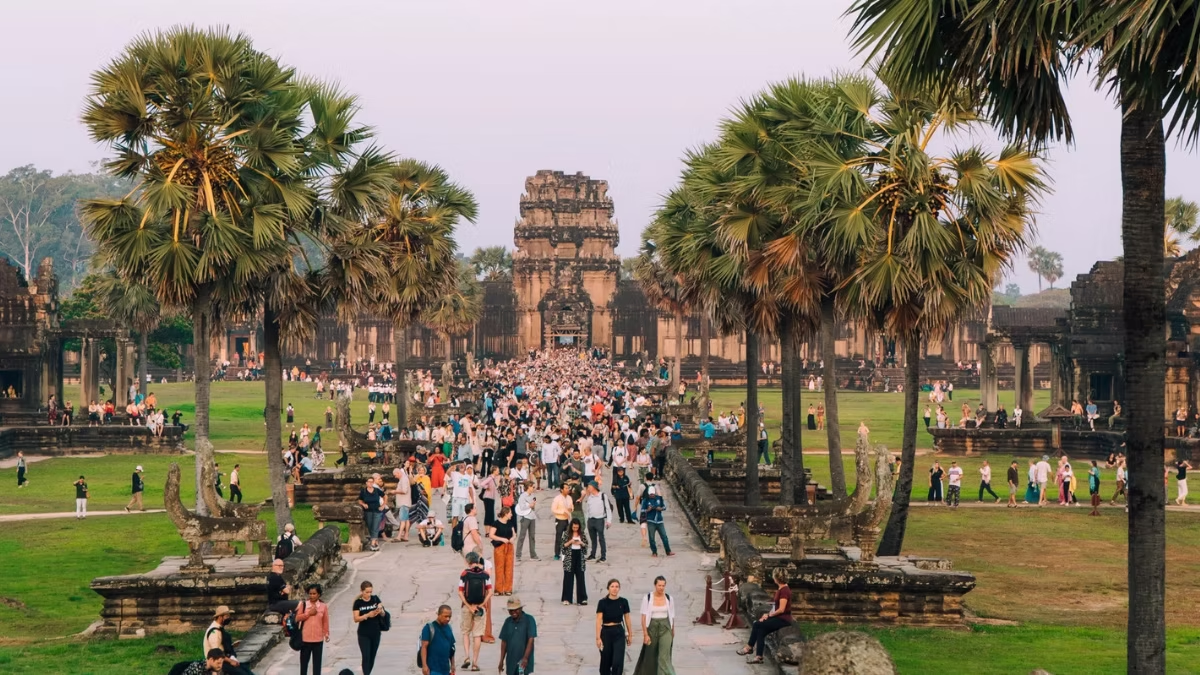
Angkor Wat Crowds — When Is It Least Busy? (2026 Guide)

Angkor Wat is least crowded in July and August (wet season), on weekday mornings during shoulder months (May, October, November), and during the late afternoon window (3:30–5:30 PM) on any day of the year. The busiest periods are December and January (peak tourist season), the weeks surrounding Chinese New Year (January or February), Khmer New Year (April), and international school holiday periods. Midday (11:00 AM–2:00 PM) brings peak tour bus traffic regardless of season.
Managing crowds at Angkor Wat is one of the most important skills for getting the experience you want. The difference between arriving at the right time and the wrong one can be hundreds of people at the reflecting pool — or near-solitude in the inner gallery. This guide gives you a detailed crowd map so you can plan with precision.
Top Tickets
Crowd Levels by Season
The Angkor Archaeological Park sees its highest visitor numbers from November to February (dry season), with December and January at peak. Visitor volumes in peak season run approximately 40% higher than average. The wet season (May to October) is significantly quieter — daily ticket sales in July and August can be as low as 15–20% of December levels. November and March are the best shoulder months, combining manageable crowds with good weather.
Peak Season: December and January (Very High Crowds)
December and January are the busiest months at Angkor Wat by a significant margin. The combination of school holidays (across Europe, North America, and Australia), the most comfortable weather of the year, and peak outbound travel produces the highest visitor volumes of the year. Ticket sales approaching and exceeding pre-COVID levels of 7,000 per day occur during this period.
What peak season means in practice:
- Sunrise reflecting pool: 300–500+ people; arrive by 4:45 AM to secure a front-row position
- Midday (11:00 AM–2:00 PM): extremely busy; major temples feel crowded in every section
- Phnom Bakheng sunset: at capacity (300 people) by 4:30–5:00 PM; arrive by 4:00 PM
- Accommodation: book 3–4 months in advance; prices at peak
Chinese New Year (Late January or February — Very High Crowds)
Chinese New Year brings a surge in visitors from China, Hong Kong, Taiwan, and the Chinese diaspora worldwide. Exact dates shift each year (check the calendar before booking). This period can be as busy as peak December at the main temples.
Khmer New Year (Mid-April — Moderate Crowds)
Khmer New Year (Chaul Chnam Thmey) typically falls in mid-April and is a major Cambodian public holiday. Domestic tourism increases significantly during this period, and some international visitors time their visit to coincide with the celebrations in Siem Reap. Angkor Wat itself sees higher-than-average traffic but the heat (April is extremely hot — up to 38°C) keeps some visitors away.
Shoulder Season: March and November (Low–Moderate Crowds)
March and November represent the best balance between manageable crowds and good conditions.
November is widely considered the ideal month to visit — the wet season has ended, the landscape is still green, temperatures are comfortable (22–30°C), and crowds have not yet reached their December peak. This is when many experienced travellers choose to go.
March sees lower temperatures than April, fading crowds from the February peak, and minimal rainfall. The heat is beginning to build (32–36°C) but is still manageable with early starts.
Low Season: May to October (Low Crowds)
The wet season (May to October) is by far the quietest period at Angkor Wat. Daily ticket sales in July and August average approximately 1,000–1,500 per day — compared to 5,000–7,000 in peak season. The temples feel profoundly different with fewer visitors: the bas-reliefs can be examined without jostling, the reflecting pool at sunrise has space, and some of the more remote Grand Circuit temples feel genuinely deserted. The trade-off is afternoon rain (typically 1–3 hours daily) and higher humidity.
July and August: The quietest months of the year. Accommodation prices in Siem Reap are at their lowest. The surrounding landscape is intensely green. Morning visits (5:00–11:00 AM) are typically rain-free. This is the best time to experience the temples as the ancient Khmer might have intended — vast, atmospheric, and largely empty.
October: The last month of the wet season. Rain is tapering off and the landscape retains its greenness. Increasingly popular with experienced visitors who know the value of the shoulder season.
Crowd Levels by Time of Day
Regardless of season, the following time-of-day pattern holds fairly consistently across the year:
| Time | Crowd Level | Notes |
|---|---|---|
| 5:00–6:00 AM | High (at reflecting pool) | Sunrise crowds; manageable inside the temple |
| 6:00–8:00 AM | Moderate, declining | Post-sunrise; excellent for inside temple exploration |
| 8:00–10:00 AM | Moderate, rising | Tour buses beginning to arrive |
| 10:00 AM–12:00 PM | High | Peak tour bus period |
| 12:00–2:00 PM | Moderate | Some groups at lunch; still busy |
| 2:00–3:30 PM | Moderate | Afternoon heat keeps some visitors away |
| 3:30–5:45 PM | Low–Moderate | Best quiet window of the day |
| 5:45–6:00 PM | Low | Temple closing; most visitors have left |
The best daily strategy: Arrive at Angkor Wat at sunrise (5:00–5:15 AM). Explore the temple until 9:30 AM when the crowd builds. Move to a second temple (Bayon or Ta Prohm) from 10:00 AM. Lunch and rest from 12:00–2:00 PM in Siem Reap or a park restaurant. Return to Angkor Wat or Phnom Bakheng from 3:30 PM for the late afternoon golden hour.
The Quietest Temples in the Park
Even during peak season, some temples remain consistently uncrowded:
- Preah Khan (Grand Circuit) — Large, sprawling, and rarely as busy as the main circuit; best in early morning
- Neak Pean — The island sanctuary sees a fraction of the traffic of Angkor Wat or Bayon
- Ta Som — A small, atmospheric temple with almost no crowds even in peak months
- Banteay Kdei — Adjacent to the more-visited Ta Prohm but significantly quieter
- Beng Mealea (40 km east) — A genuine off-the-beaten-track experience; rarely more than a handful of visitors at any time
- The Roluos Group (15 km east) — Among the oldest Angkor-era temples; visited by a small fraction of visitors who make it this far
If avoiding crowds is your primary concern, planning your itinerary around these temples — with brief peak-hour visits to the famous sites before or after their most crowded periods — gives you the best of both worlds.
Crowds at Phnom Bakheng Sunset
Phnom Bakheng deserves special mention. The most popular sunset spot in the Angkor complex has a strictly enforced capacity limit of 300 people on the summit at any one time. During peak season, the queue to enter the summit trail fills this capacity by 4:30–5:00 PM — meaning visitors arriving at 5:00 PM may be turned away.
Strategy for Phnom Bakheng: Arrive by 4:00 PM during peak season; 4:15–4:30 PM during shoulder season. The 25-minute uphill walk to the summit should begin before the capacity limit is reached. Pre Rup Temple on the Grand Circuit is the best alternative sunset viewpoint — elevated, uncrowded, and equally beautiful.
Frequently Asked Questions
When is Angkor Wat least crowded?
July and August (wet season) are the quietest months — daily ticket sales can be 15–20% of peak season volumes. Within any given day, the late afternoon (3:30–5:45 PM) is consistently the quietest period. Early morning (6:00–8:00 AM, after the sunrise rush) is also much quieter than midday.
When is Angkor Wat most crowded?
December and January are the busiest months. Chinese New Year (late January or February) brings another surge. Midday (11:00 AM–2:00 PM) is the busiest time of day throughout the year. Weekends are consistently busier than weekdays across all seasons.
Is Angkor Wat crowded at sunrise?
Yes — sunrise is popular. The north reflecting pool in December and January has hundreds of people by 5:30 AM. However, once the sunrise crowd disperses (around 7:00–7:30 AM), most of them move to Angkor Thom and other temples, leaving Angkor Wat itself significantly quieter for interior exploration.
How many tourists visit Angkor Wat per day?
In peak season (December–January), daily ticket sales approach and occasionally exceed the pre-COVID high of approximately 7,000 per day. In the low season (July–August), daily sales average approximately 1,000–1,500. These figures include all temples in the Angkor Archaeological Park, not Angkor Wat alone.
Does Angkor Wat get crowded in the wet season?
No — the wet season (May to October) is the quietest period, with dramatically lower visitor numbers than the dry season. Morning visits in the wet season are typically rain-free, and the atmosphere in the less-crowded temples is extraordinary.
