
Angkor Wat Sunrise — What to Expect & How to Plan It

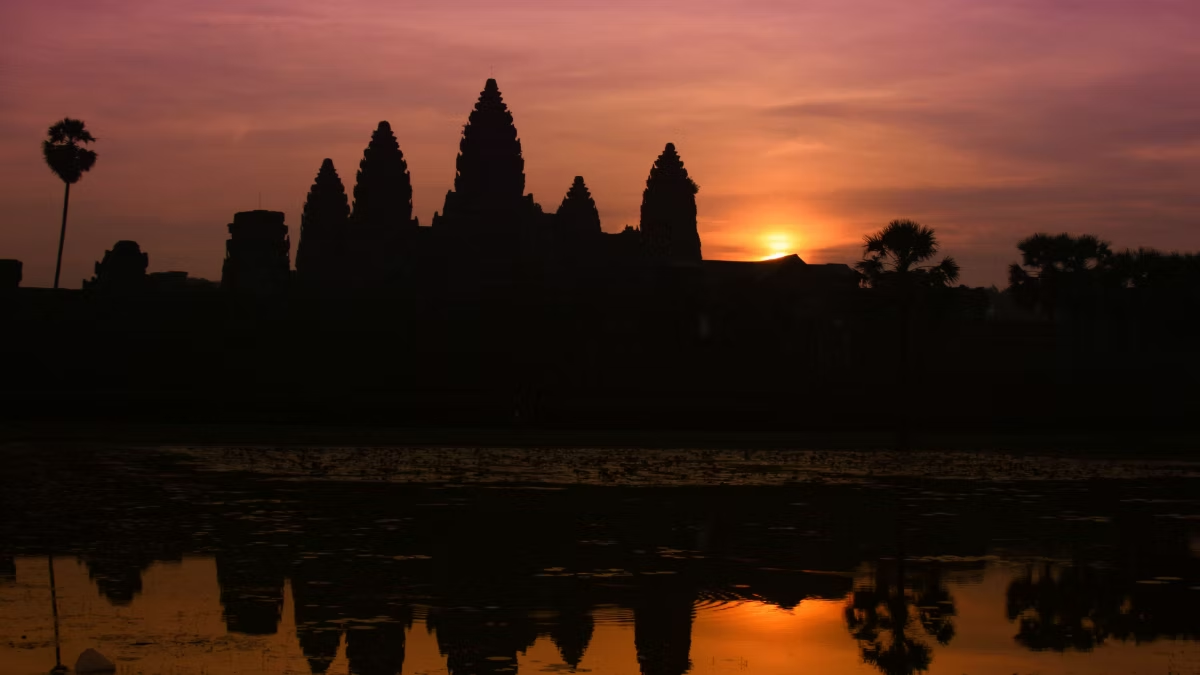
Sunrise at Angkor Wat is one of the most celebrated travel experiences in Southeast Asia. The main temple faces west, so the rising sun silhouettes the five towers against a brightening eastern sky and reflects them in the north and south reflecting pools. Arrive at the north reflecting pool by 5:00–5:15 AM during most of the year; 4:45 AM during peak season (December–January). The sun clears the towers between 5:45 and 6:15 AM depending on the season and cloud cover. The temple opens at 5:00 AM; the ticket office opens at 4:30 AM.
Every year, hundreds of thousands of people set their alarm for 4:00 AM in Siem Reap. They load into tuk-tuks in the darkness, ride through empty streets to the Angkor Archaeological Park, walk by torchlight to a pool of still water, and wait. And when the sky begins to lighten and the five towers of Angkor Wat emerge from the darkness in silhouette, reflected in the water below — most of them agree, without reservation, that it was worth it.
Angkor Wat at sunrise is not a tourist cliché. It is one of the genuinely unmissable experiences in world travel.
Top Tickets
Why Sunrise at Angkor Wat Is Special
Angkor Wat faces west — one of the few Khmer temples that does. This means the rising sun appears behind the temple when viewed from the main causeway and reflecting pools. The silhouette effect this creates — the five towers backlit against a sky that transitions through deep blue, purple, orange, and eventually gold — is the basis of the most reproduced travel photograph in Southeast Asia.
The reflecting pools amplify the experience. When the pre-dawn air is still (which it usually is), the north and south pools on either side of the main causeway create perfect mirror images of the towers. The reflection doubles the composition and creates the impression of towers rising both above and below the waterline.
Exact Timing — When to Arrive and What You’ll See
4:30–4:45 AM: Depart Siem Reap by tuk-tuk (15–20 minutes to the temple). If you have not pre-purchased your Angkor Pass, the ticket office opens at 4:30 AM — buy the afternoon before to skip this step.
5:00–5:15 AM: Arrive at the north reflecting pool and take your position on the northern bank, facing east. The best positions are on the stone platform at the north edge of the pool, where the towers are centred in the reflection. During peak season (December–January), arrive by 4:45 AM.
5:15–5:45 AM: The sky begins to lighten. The towers are still dark silhouettes but the sky behind them takes on the first colours. This period — the deep blue pre-dawn light — produces some of the most atmospheric photographs of the entire sunrise sequence.
5:45–6:15 AM: Sunrise itself. The exact timing varies by season: earliest around the June solstice (approximately 5:35 AM), latest around the December solstice (approximately 6:20 AM). The sun does not rise directly behind the central tower at most times of year — it rises slightly to the north or south of centre depending on the season.
6:15–7:00 AM: Post-sunrise golden hour. The towers are now fully illuminated from behind; the reflected image in the pool transitions from a dark silhouette to a warm golden reflection. Many photographers consider this phase — when the towers glow gold against a blue sky rather than silhouette against an orange one — the most beautiful.
7:00 AM onwards: Most tour groups begin moving toward the temple interior. The reflecting pool area begins to empty. This is your cue to move inside and experience the bas-relief gallery in relatively quiet conditions.
The Best Position at the Reflecting Pool
North pool, north bank: The classic position. Walk east along the main causeway; the north pool is on your left approximately 100 metres before the main entrance gopura. The best position is along the north bank of the pool, central to the pool’s width, facing east. The five towers appear centred in the reflection.
North pool, west bank: A less-used angle — approaching the pool from the western side and photographing the towers appearing above the pool’s west end. This creates a more unusual composition.
South pool: Less crowded than the north pool and gives a slightly different angle — the towers appear offset to the right of centre from the south position. Many experienced photographers prefer the south pool precisely because it is less crowded.
The causeway itself: A long shot looking east along the causeway, with the towers at the end of the perspective, is a completely different composition from the pool shots — less about the reflection and more about the architectural scale.
Cloud Cover — A Friend, Not an Enemy
Many first-time sunrise visitors are disappointed when their sunrise morning is cloudy. But partial cloud cover frequently produces the most dramatic Angkor Wat sunrise photographs. Dense, complex clouds catch the pre-dawn light in deep reds and purples that a cloudless sky cannot produce. The towers silhouetted against a multicoloured, dramatic sky are often more photographically compelling than against a uniform orange gradient.
Only complete, unbroken cloud cover (which prevents any colour from developing in the sky) is genuinely disappointing. Anything from 20% to 80% cloud cover typically produces excellent sunrise conditions.
What to Bring for the Sunrise Visit
A warm layer: Pre-dawn temperatures at Angkor Wat are surprisingly cool — particularly from November to February, when temperatures can drop to 18–22°C before sunrise. Pack a light jacket or layer to wear while waiting at the reflecting pool.
A torch or phone torch: The path from the carpark to the reflecting pool is in complete darkness before 5:30 AM. Your tuk-tuk driver will park and you will walk — bring a light.
A tripod or GorillaPod: For long-exposure photography in the pre-dawn darkness, a stable base is essential. Compact travel tripods are easy to carry and make the difference between sharp and blurred low-light images.
Your Angkor Pass: The ticket checkpoint at the main entrance is active even at 5:00 AM. Have your pass ready.
Water: Carry water from Siem Reap — vendors near the temple are not open at 5:00 AM.
The Guided Sunrise Tour Option
For visitors who want the sunrise experience without managing the logistics themselves, a guided sunrise tour handles hotel pickup, transport to the temple, positioning at the reflecting pool, and then a full guided tour of the interior after sunrise.
The guide’s positioning knowledge is genuinely valuable — knowing exactly where to stand at the north pool for the best composition, when to move from the pool to the inner gallery to avoid the post-sunrise crowd, and which sections of the bas-relief gallery to visit in the best light are the specific benefits of an experienced guide at this time of day.
Book This TourAfter Sunrise — The Inner Temple
The post-sunrise period from 7:00 to 9:30 AM is the ideal time to explore Angkor Wat’s interior. Most tour groups that came for sunrise have dispersed to other temples (typically heading to Bayon next). The inner galleries — particularly the bas-relief panels — are in excellent morning light, and the crowd levels are manageable.
Use this window to explore the bas-relief gallery from east to west (the best morning light direction), then climb to the upper sanctuary before the midday crowd arrives.
Frequently Asked Questions
What time is sunrise at Angkor Wat?
Sunrise time varies seasonally. The approximate range is 5:35 AM (around the June solstice) to 6:20 AM (around the December solstice). Check a sunrise time calculator for the specific date of your visit.
What time should I arrive for Angkor Wat sunrise?
Arrive at the north reflecting pool by 5:00–5:15 AM during most of the year. During peak season (December and January), arrive by 4:45 AM to secure a good position before the crowd builds.
Is Angkor Wat sunrise worth the early start?
Yes — overwhelmingly. The dawn silhouette and reflection at Angkor Wat is one of the most beautiful natural and architectural combinations in the world. Almost every visitor who wakes at 4:00 AM for this experience describes it as one of the highlights of their trip.
Can I see sunrise at Angkor Wat without a tour?
Yes. Buy your Angkor Pass in advance, arrange a tuk-tuk the evening before (your hotel or guesthouse can help), and depart at 4:30–4:45 AM. The process is entirely manageable independently.
Does it matter if it rains or is cloudy?
Partial cloud cover frequently produces the most dramatic sunrise colours — don’t give up on the experience because the morning looks cloudy. Complete overcast (with no colour in the sky at all) is disappointing, but anything less is usually still visually rewarding.
